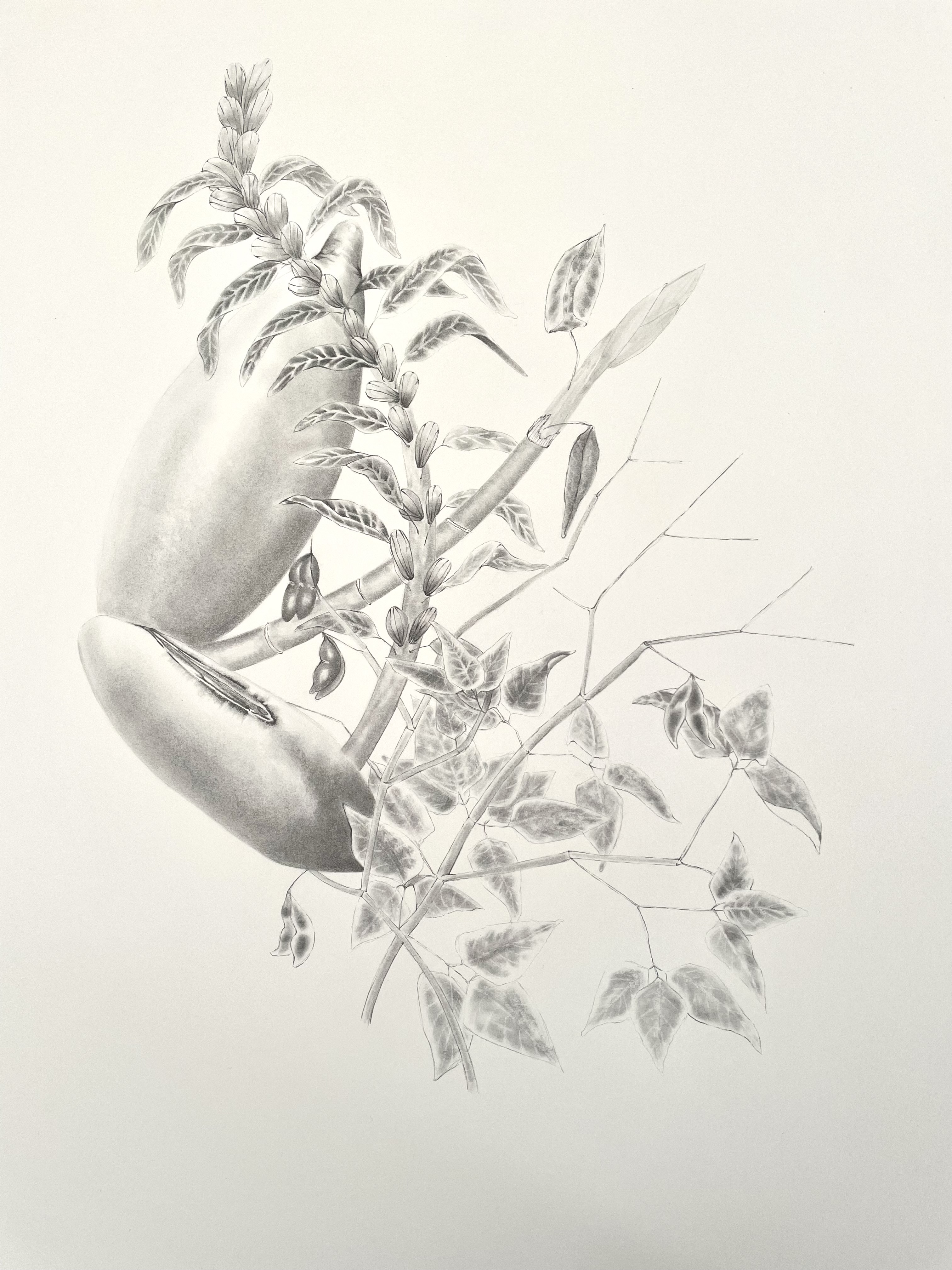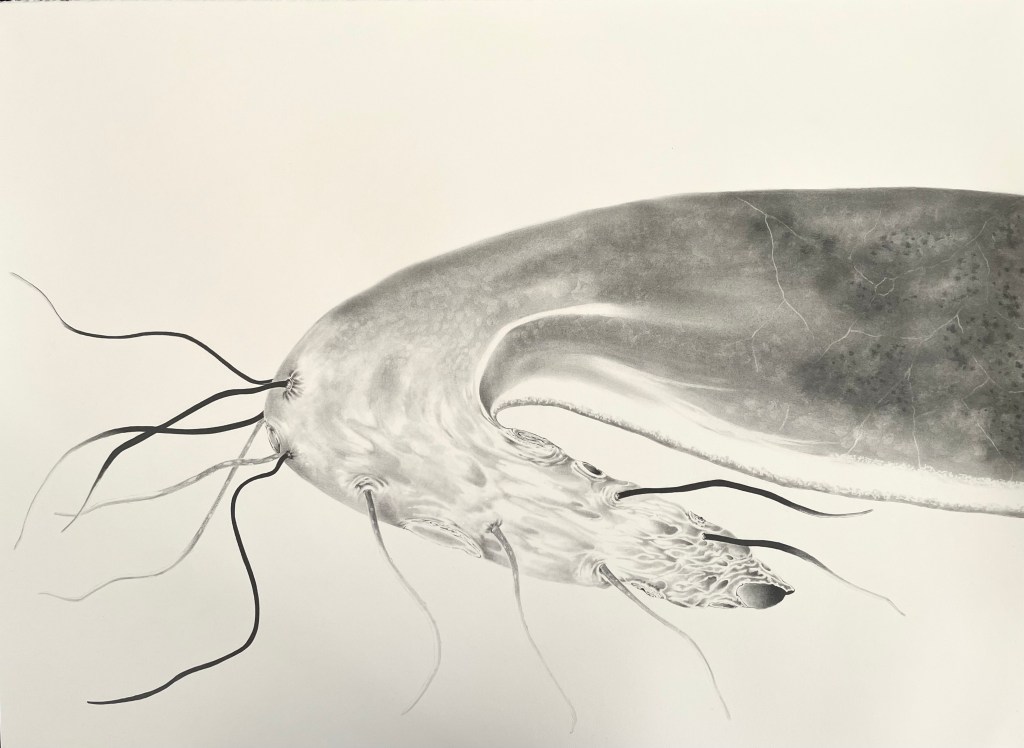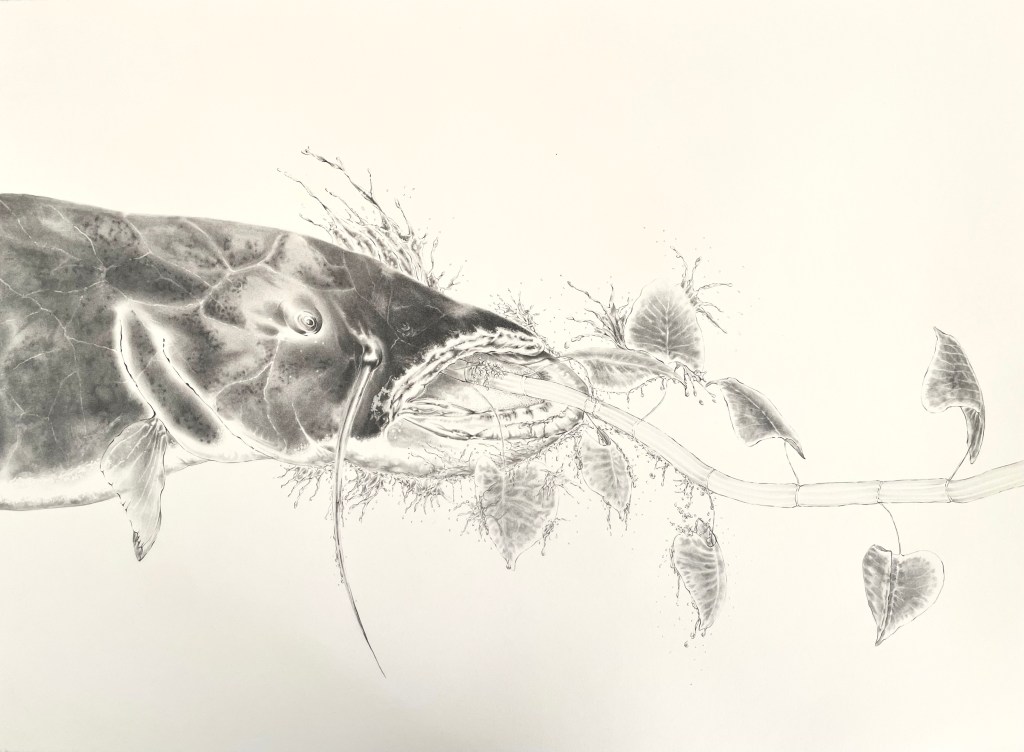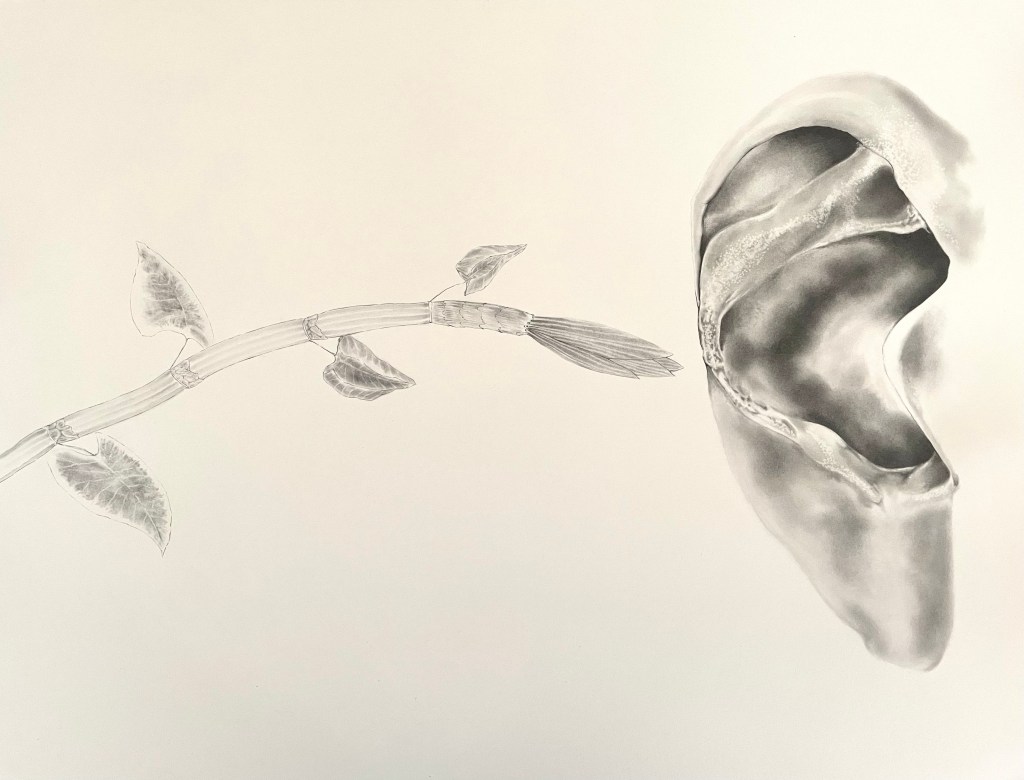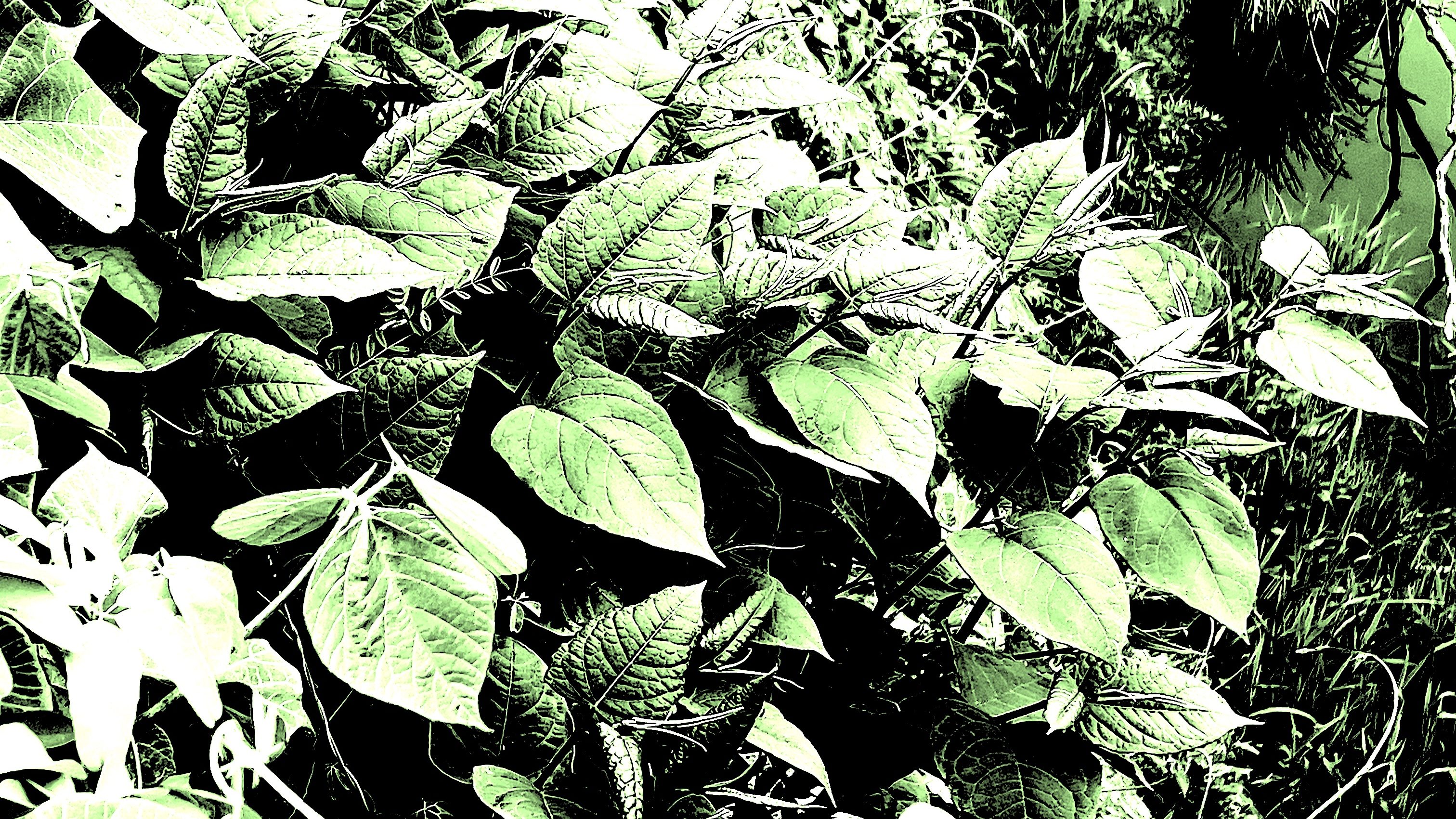
The Itadori Project (2024-) is an ongoing exploration of Japanese Knotweed. The project began in 2025 thanks to the generous prize I received from the Fondation Edouard et Maurice Sandoz (Switerland). The prize enabled me to conduct extensive research on Japanese Knotweed and I was able to retrace the steps of this much maligned yet charismatic plant from its arrival in Leiden to its roots in Japan. I spent several days in Leiden researching the archives of the Naturalis Museum and the Leiden Botanical Garden in February 2025. My team and I then spent six weeks in Japan, visiting sites where Itadori (the Japanese name for Fallopia Japonica) grows. The journey took us from the urban sprawl of Osaka City where it discretely grows by the river O, to the deep mountains of Mie or the shores of Lake Biwa where it runs free and wild, and finally to the island of Shikoku where it is cultivated. The conversations and exchanges with local scientists (whether in Europe or Japan) and their vast knowledge (along with their personal opinions on the current rhetoric used for plants deemed invasive) really helped me understand and achieve the depth I needed for this project to come to fruition. A big thank you to Dr. Duistermaat and Dr. Von Uffelen, at the Naturalis Museum and the Hortus Leiden respectively and the wonderful Prof. Iwasa of the University of Kochi, Shikoku, who took us on a road trip to meet village communities and investigate Itadori cultivation in the rural areas of the Island of Shikoku.
The works in progress from this research will culminate in a series of large and medium format drawings and video works.
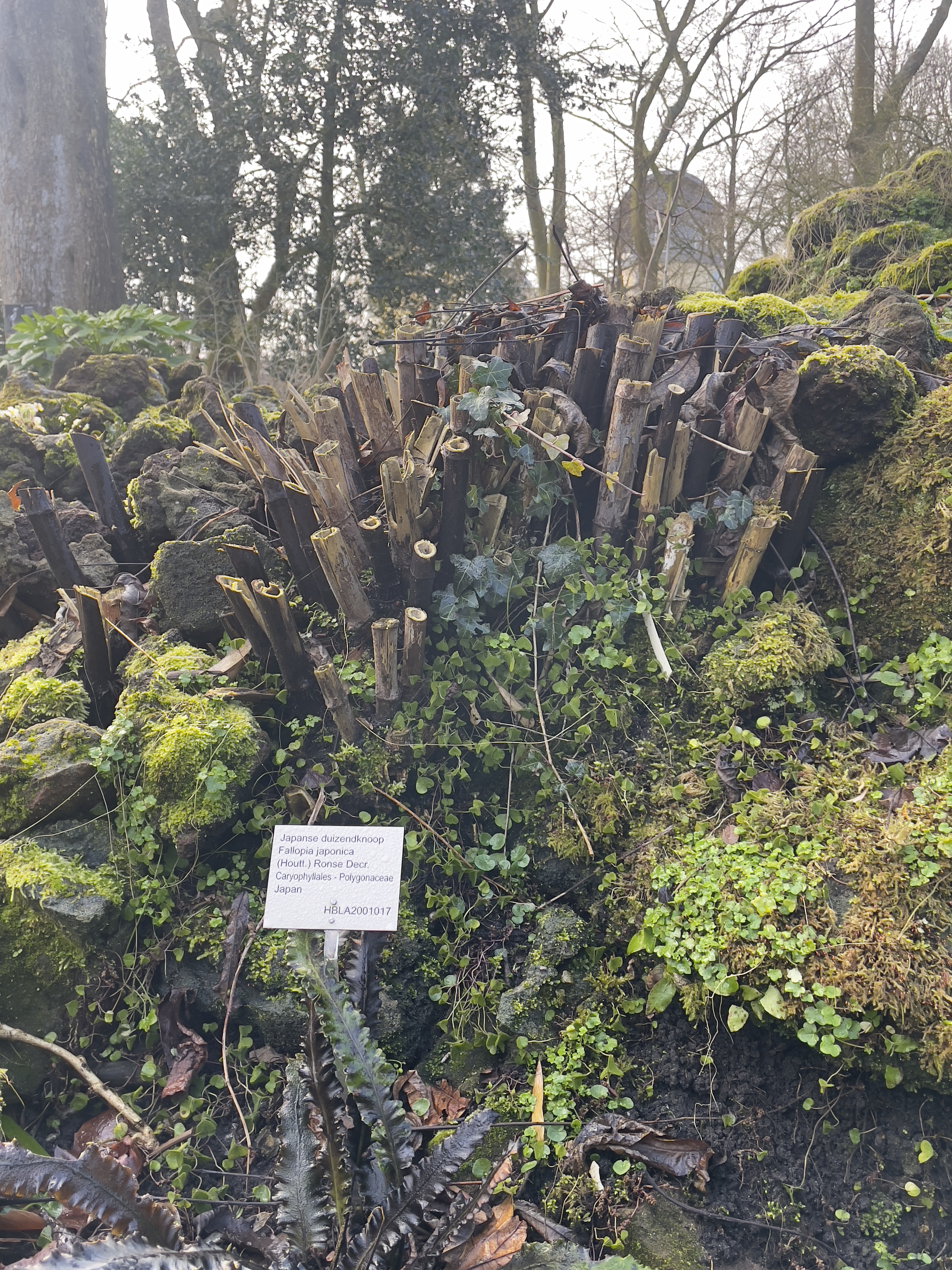
Fallopia Japonica also known as Polygonum Cuspidatum, and in Japan known as Itadori, is a perennial plant belonging to the buckwheat family. It was introduced to Europe as a prized ornamental plant, in the mid 1800s by Philipp Franz Von Siebold. This made Itadori one of the very many specimens in the vast colonial index of plant theft.
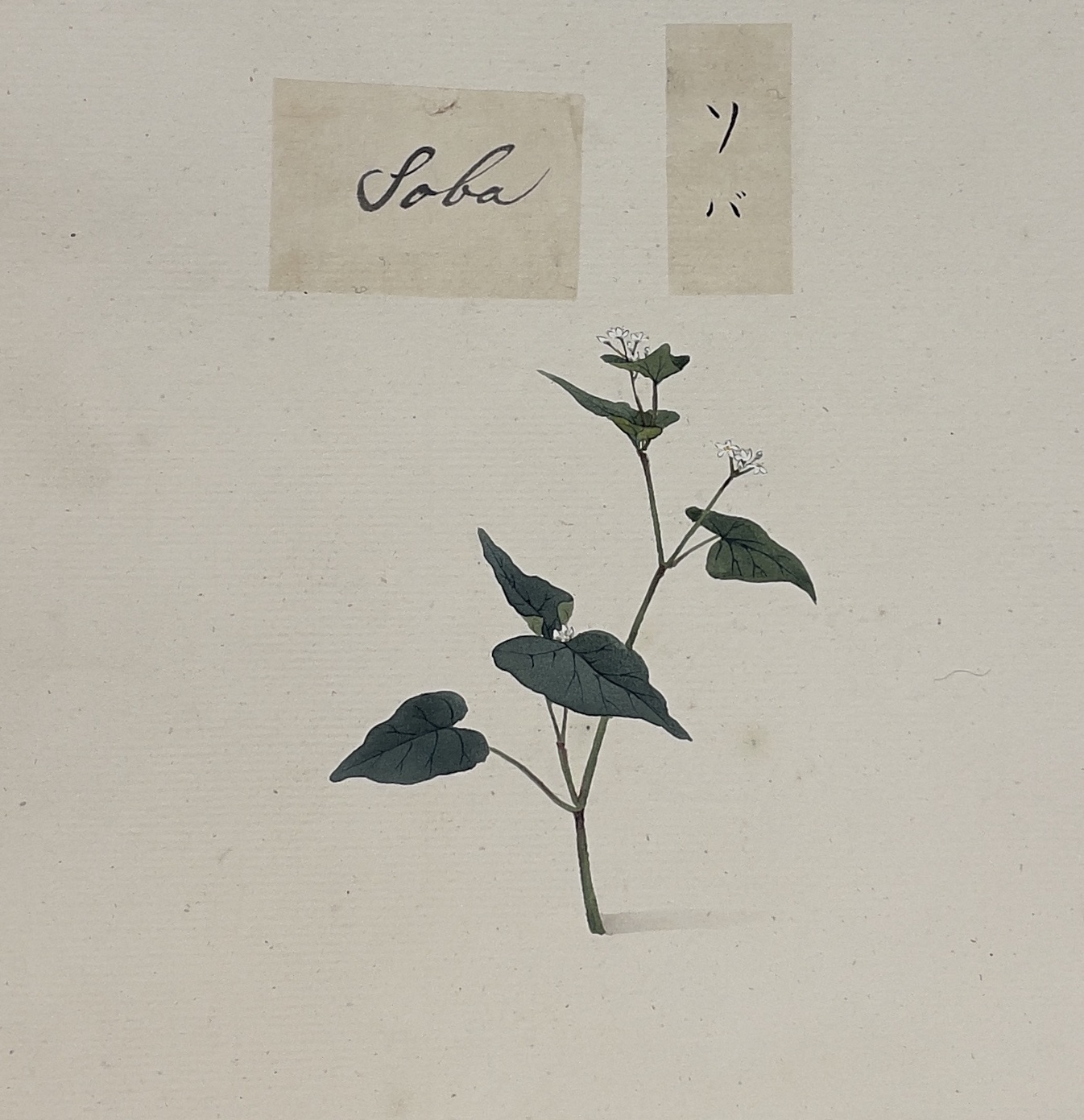
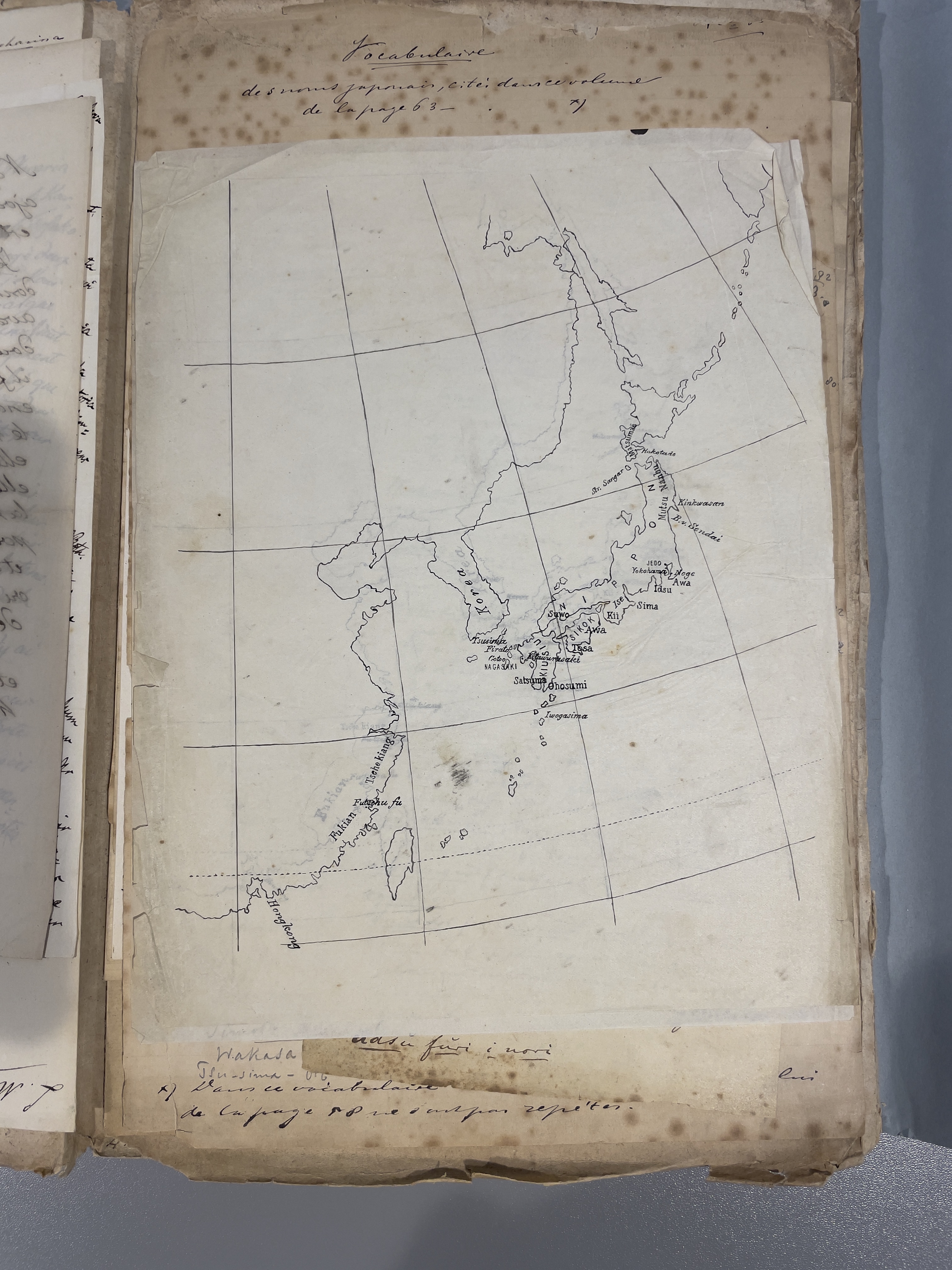

Out of the few cuttings that Siebold made and sent to various botanical gardens across Europe, one cutting was sent to Britain. It is through that single clone that much of the UK has been “invaded” by Itadori. I found out about the “invasion” in 2014 and started actively researching the plant. Its history made me think of colonial strategies of exploitation on a broader level from the slave trade to plant acclimatization societies and botanical gardens. Through a contemporary lens, I saw Itadori as a plant that broke free from its horticultural purpose. This led me think about the vocabularies of exclusion and Othering that are used in Botany, when designating a plant that has outlived its welcome or that has adapted incredibly well to its environment. This very same vocabulary is used by right wing/fascist political parties on refugees and migrants. I saw glaring similarities in the patterns between contemporary botany and current European policies concerning migrant workers. Terms such as “exotic”, “toxic”, “invasive” and “blacklisted” are as frequent in geopolitics as they are in natural history institutions. Swiss associations such as ASL Léman (Association pour la Sauvegarde du Léman) have a specific page where one can enlist as a volunteer botanical vigilante, to physically tear out knotweed patches from April to October. A parallel can be drawn to the Swiss Nationalist SVP party, whose vehemently anti-immigration stance gets traction through its blatantly racist and sensationalist posters.

A few months before traveling to Japan, I chanced upon a fascinating article in The Guardian, written by Samanth Subramanian https://www.theguardian.com/environment/2023/may/16/the-war-on-japanese-knotweed . In this article, he mentions Watanabe Koichi, an Osaka based photographer who has been documenting Japanese Knotweed around the world for over 20 years. Koichi san’s body of work ‘Moving Plants’ is a fascinating dive into a decade of photographing itadori in various parts of the globe. https://watanabekoichi.myportfolio.com/moving-plants-1 I immediately felt the resonance between our practices albeit through different mediums. I took a chance and reached out to Koichi san. We exchanged about various aspects of our research, Koichi san was extremely helpful in sharing knotweed sites around Japan and connected me to Prof. Iwasa in Shikoku. As my trip to Japan got confirmed, we agreed to meet in Osaka.
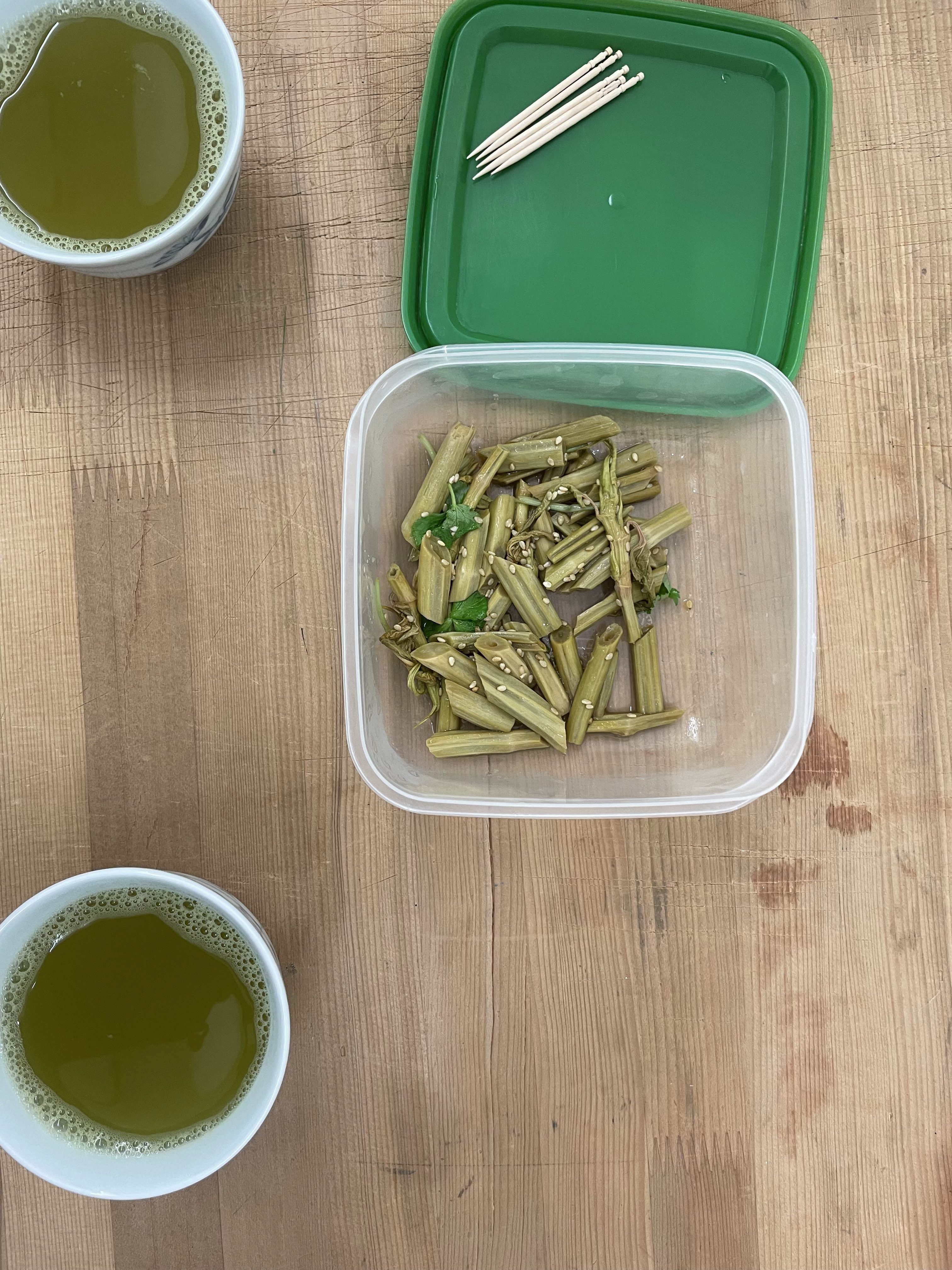
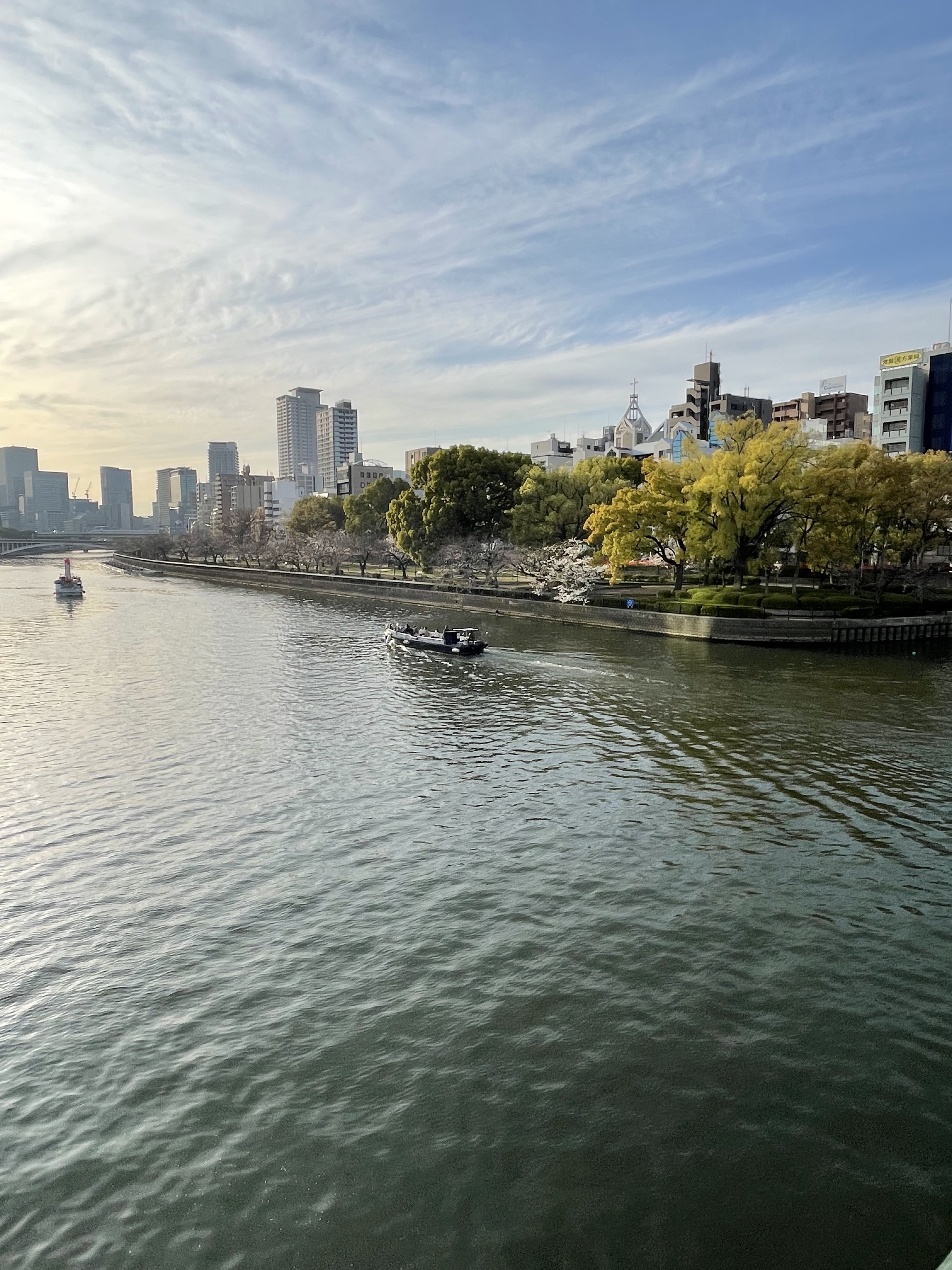
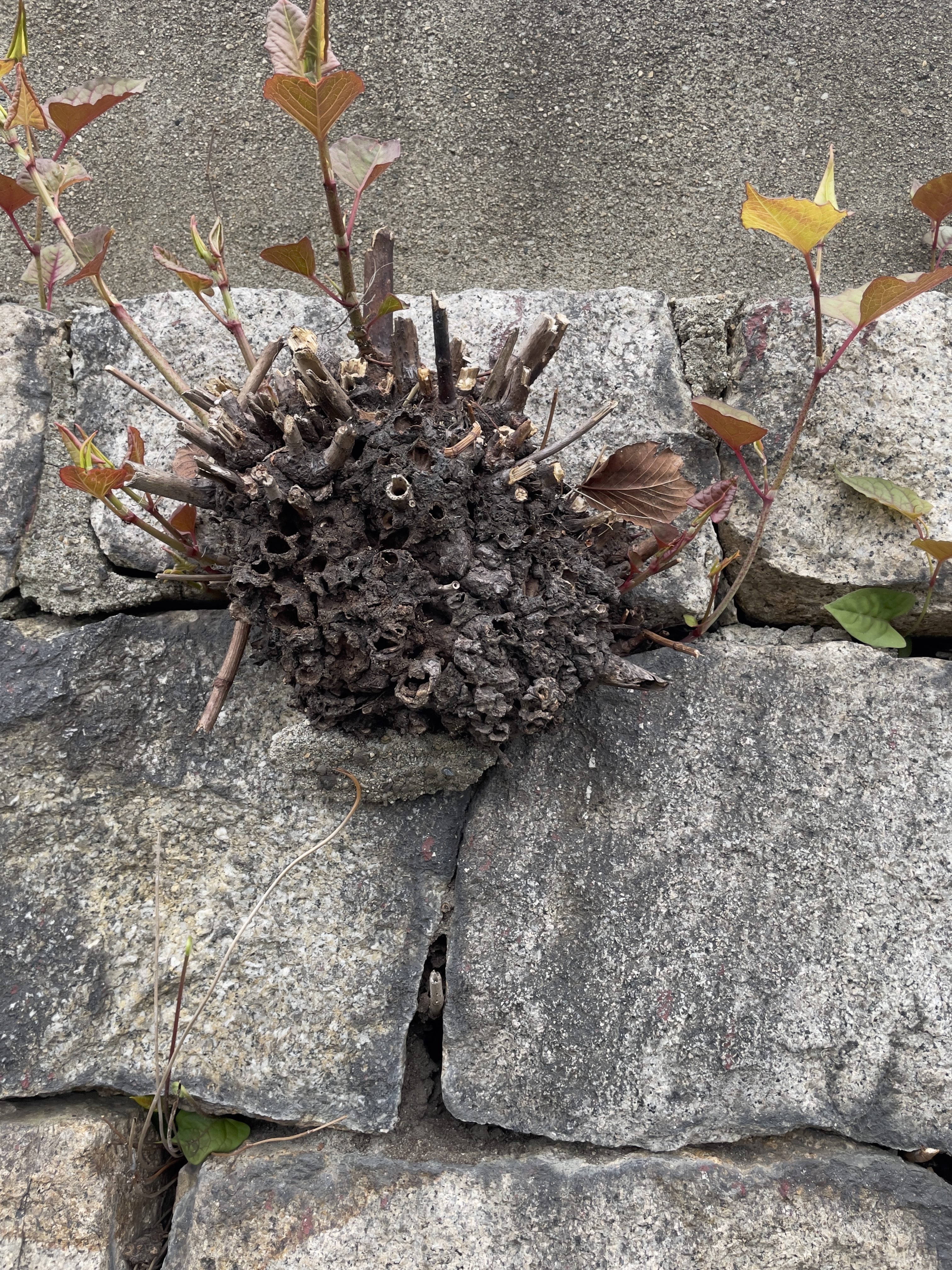
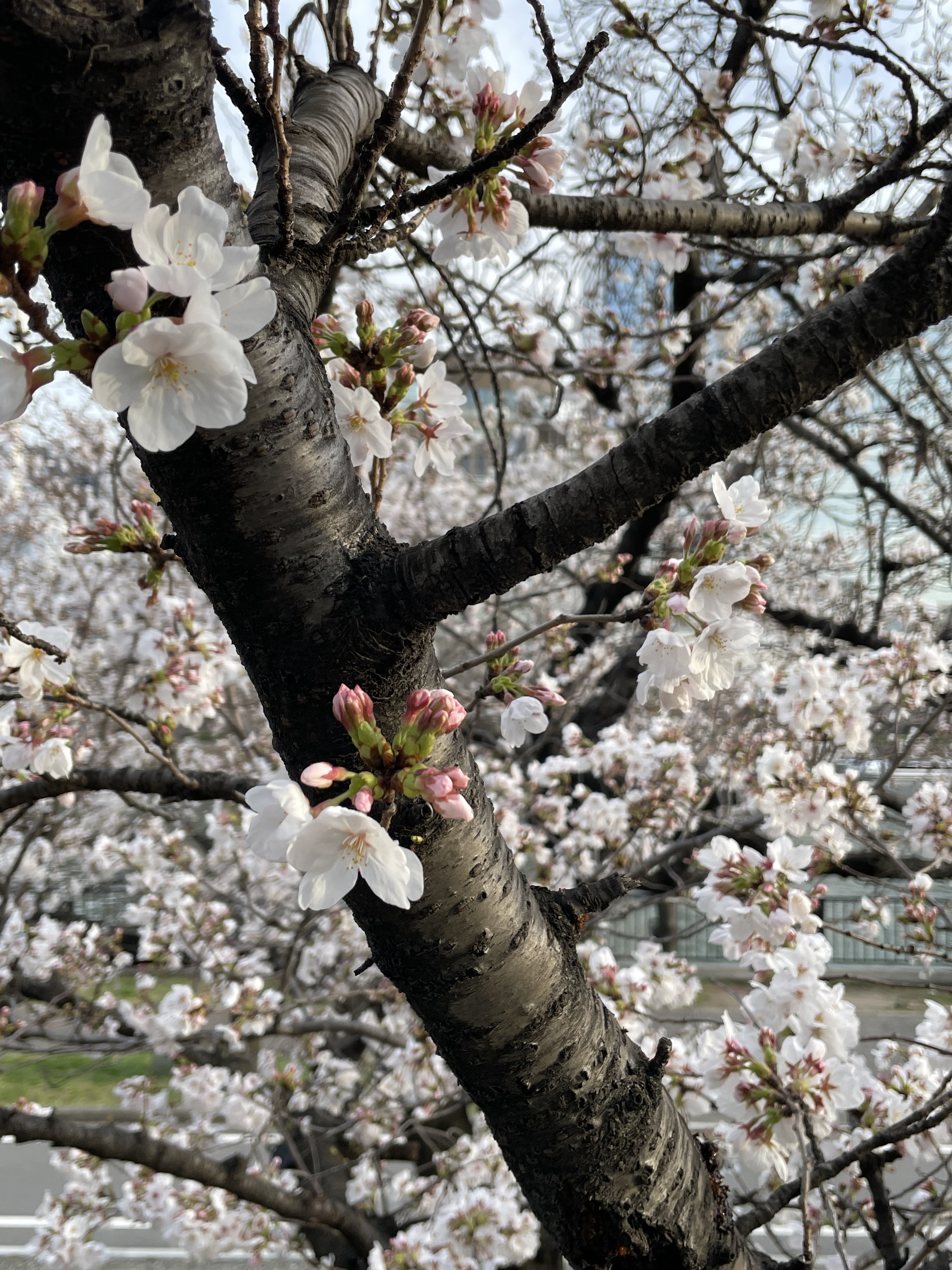
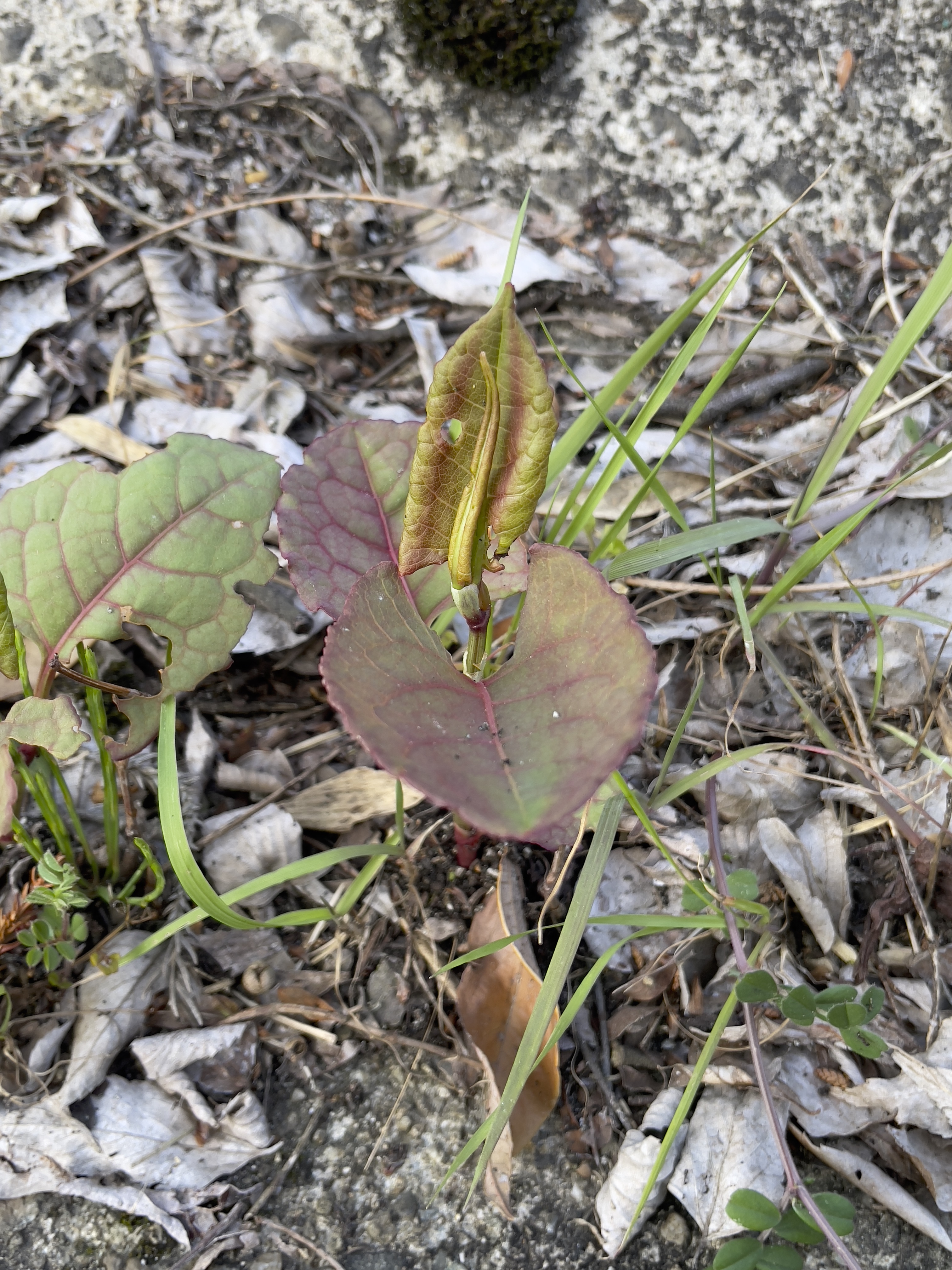
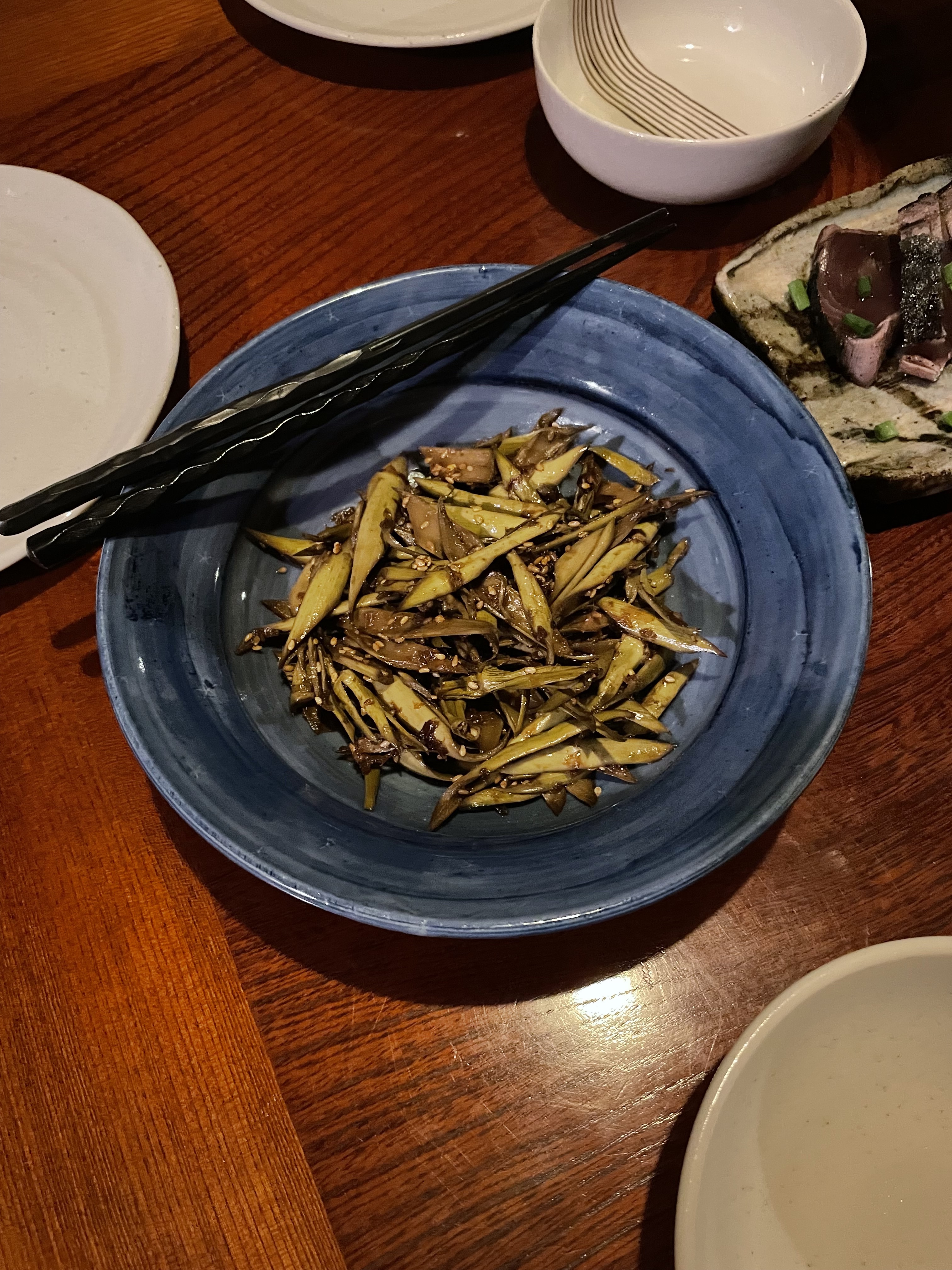
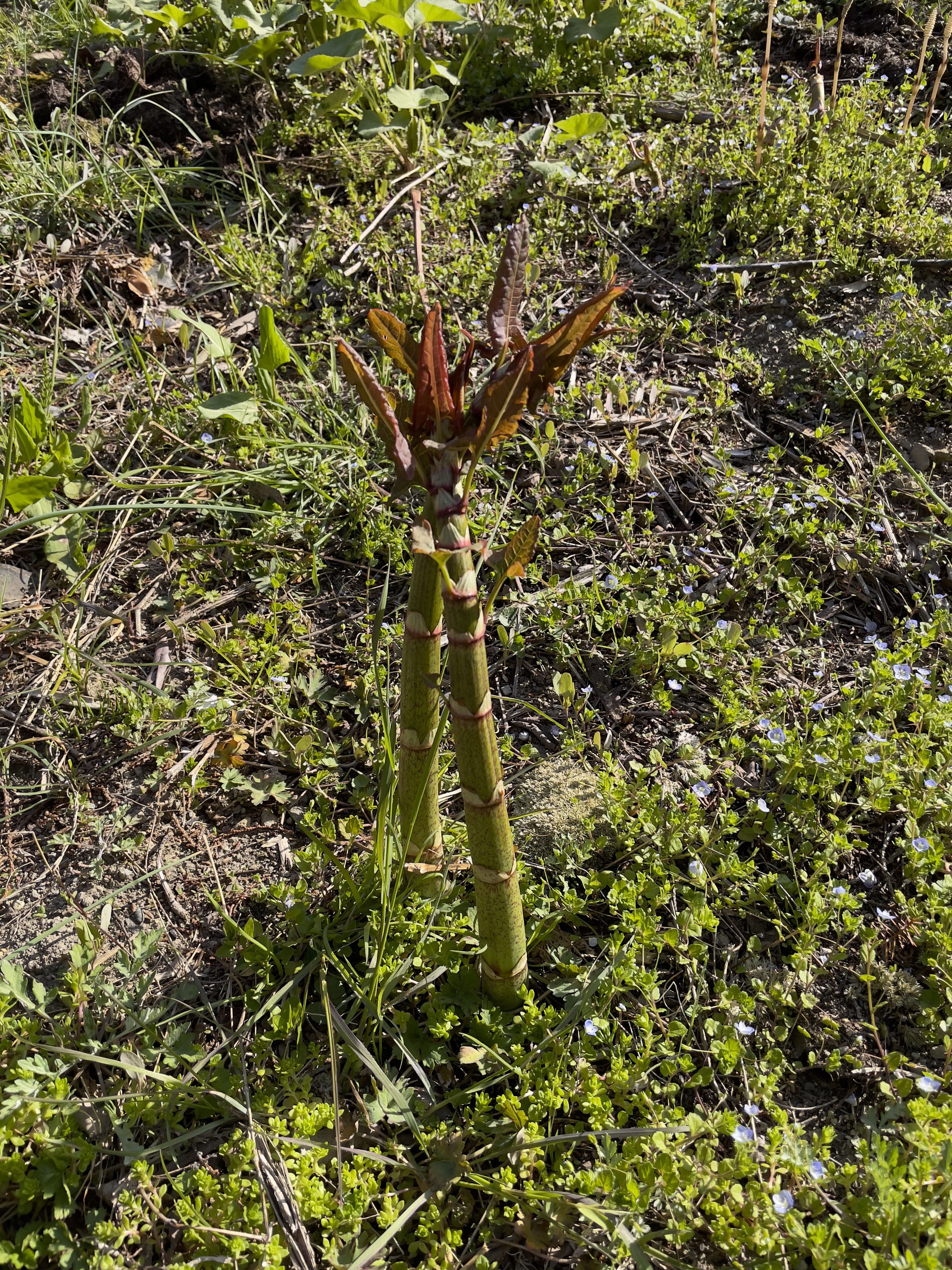
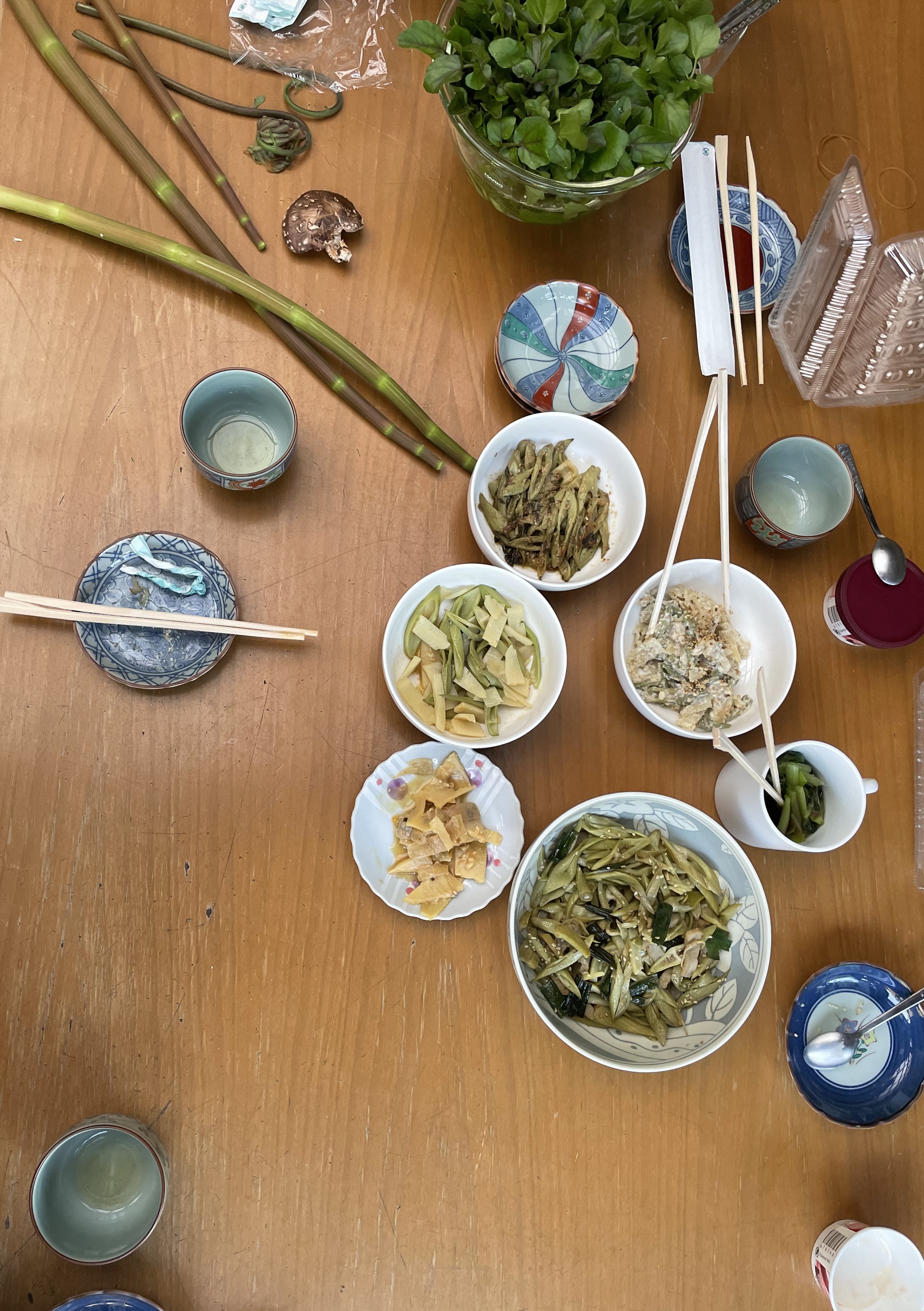
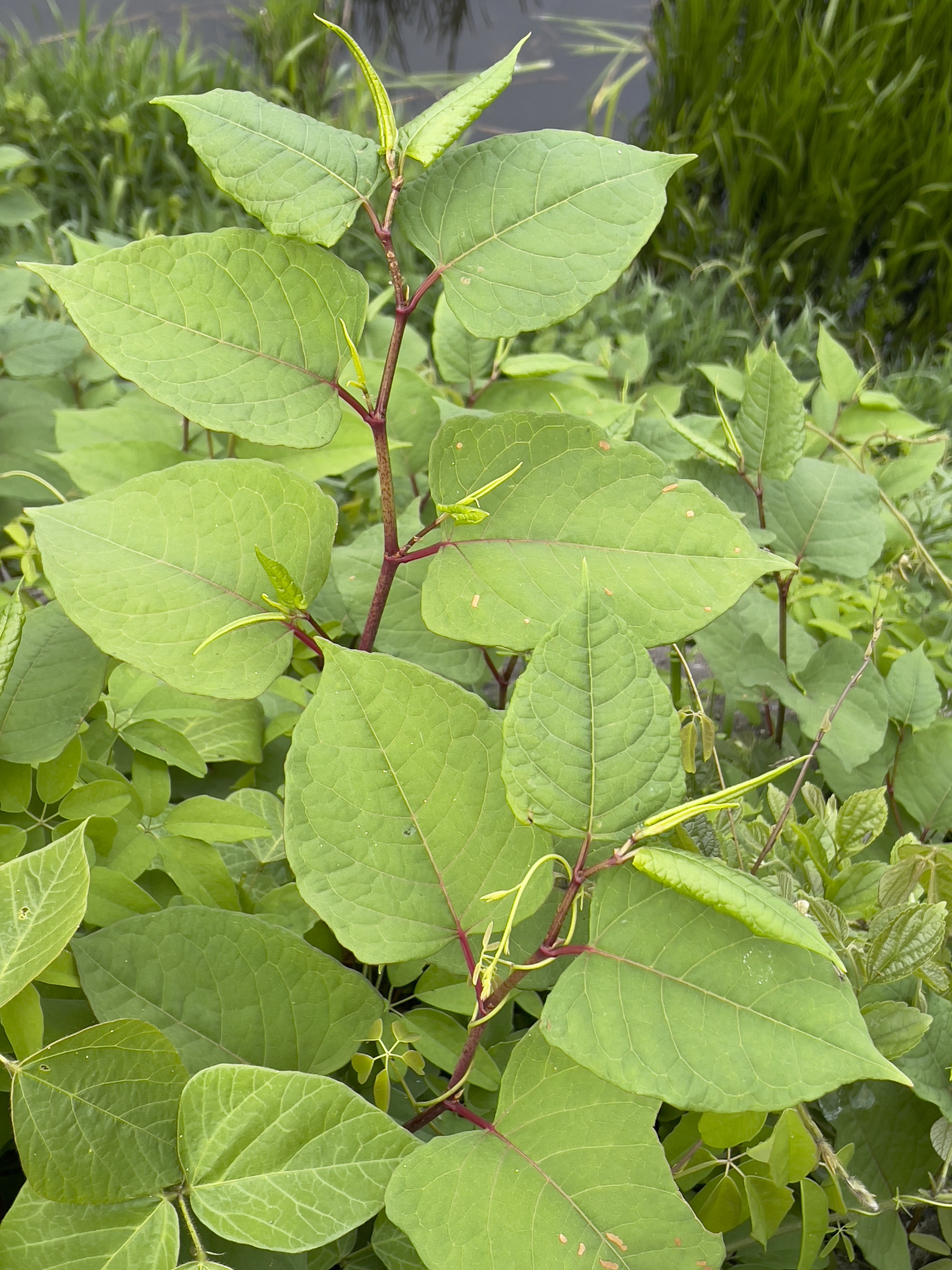
Our first meeting with Koichi san was a moment of instant warmth: the sharing of food and knowledge. He had prepared a dish made of young knotweed shoots that he had foraged near the river O. After the tasting we made our way to the river, which meanders lazily through the urban sprawl of Osaka. Knotweed grew in clumps, through the gaps of the stone wall. Rhizomic structures that resembled carpenter wasp nests, with small spear like pink shoots growing out of them. A few feet away, between the wall and the river lay a path lined with cherry blossoms. They were at their peak and families had come to contemplate the famous flowers. This Japanese custom that goes by the name O-Hanami, literally means “flower viewing”, an observation of the transient beauty of nature. Traditionally, people organize special picnics under the trees, all over Japan.
Seeing the furious blossoming of these cherry trees with their delicate petals, white with a the slightest blush of pink seemed like a perfect photo op. However, I was enthralled by the poetics of Itadori with its bulbous rhizomes that resembled ancient, malformed organs with multiple aortas and strong young shoots with green bronze leaves. This wild “Tiger Cane” (the literal meaning of Itadori) growing unnoticed next to the showy, much prized cherry blossom. A humble and quiet form of resilience and survival. There was something so zen about that small meditation I experienced.
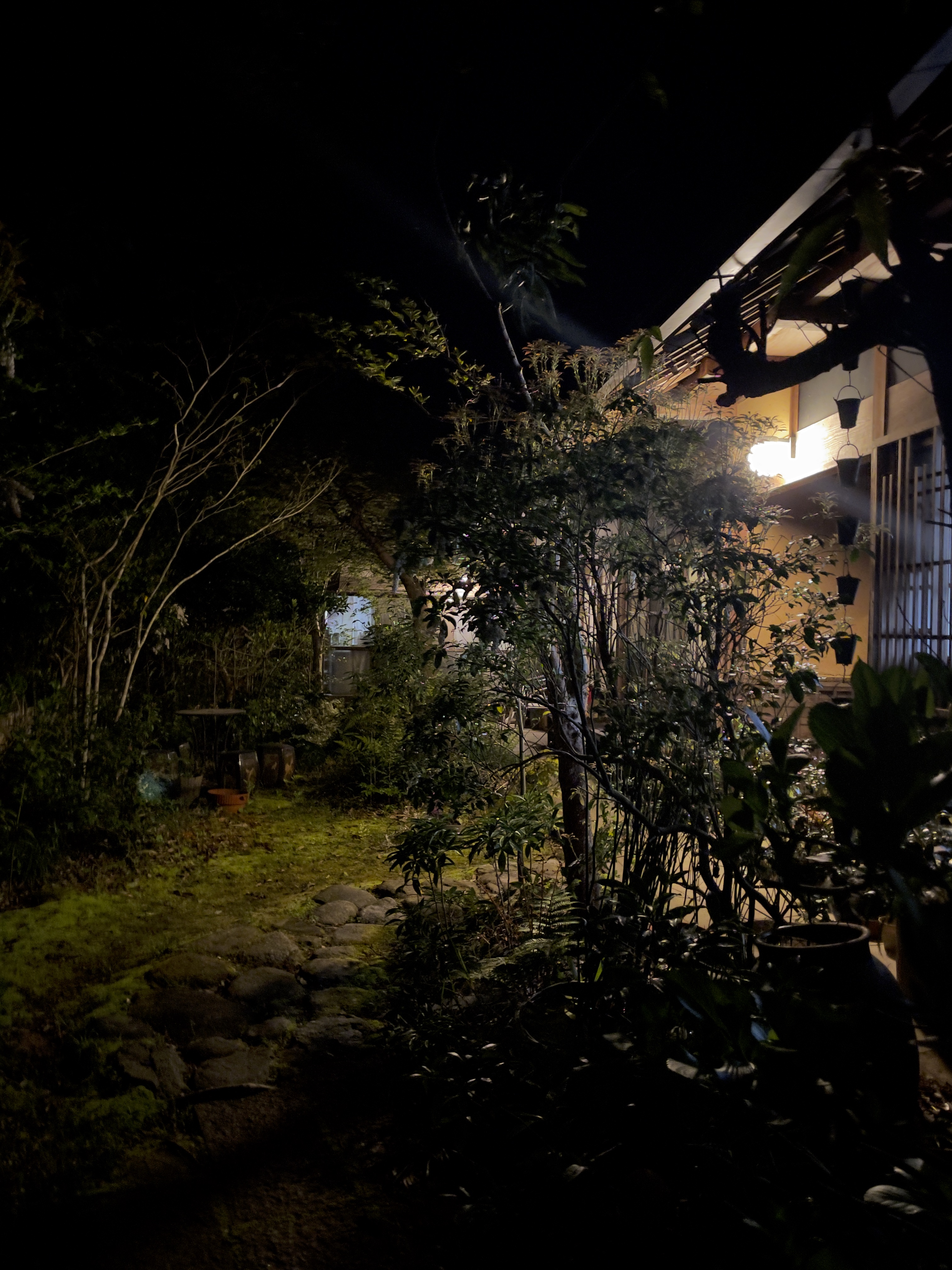
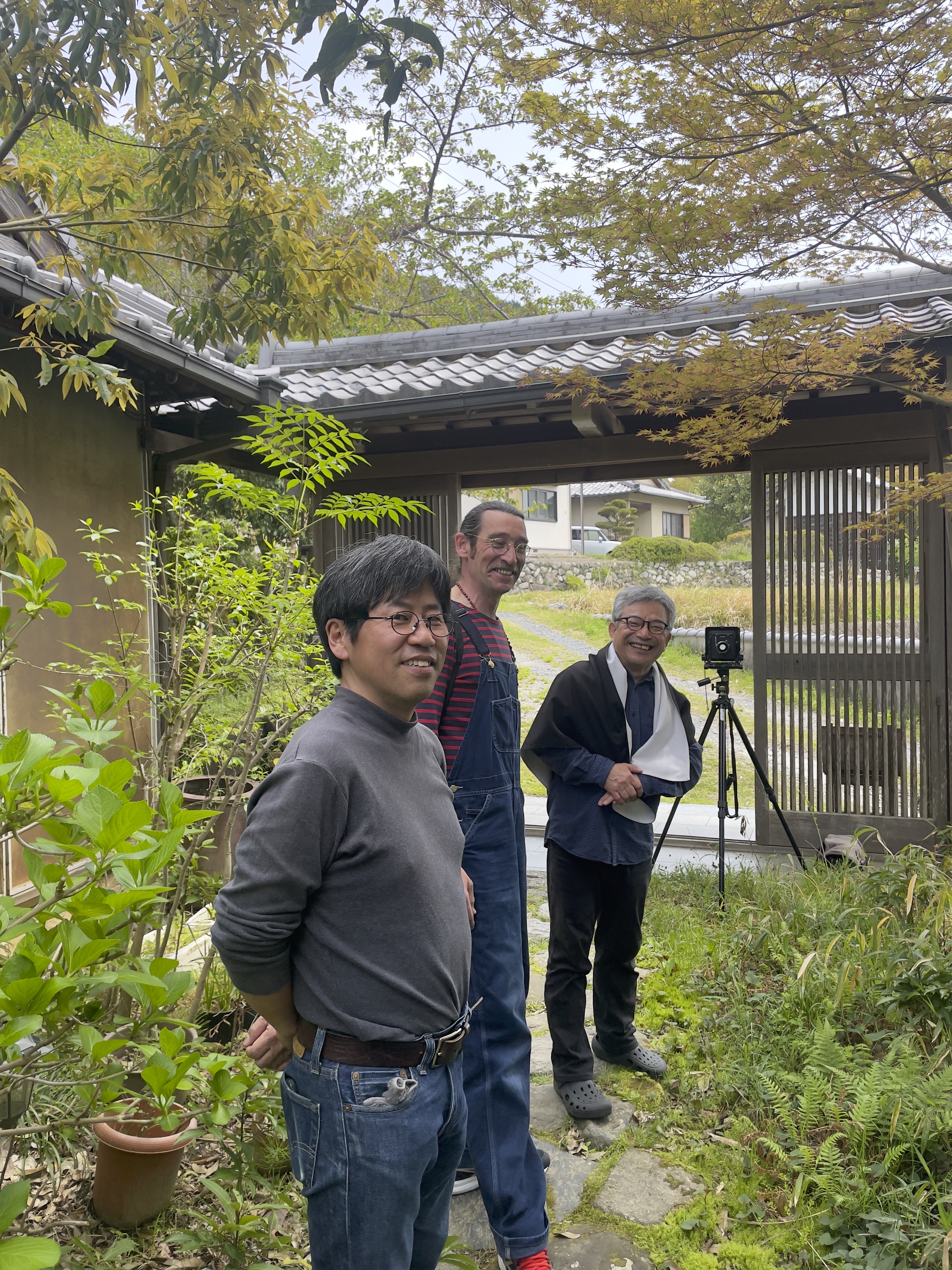
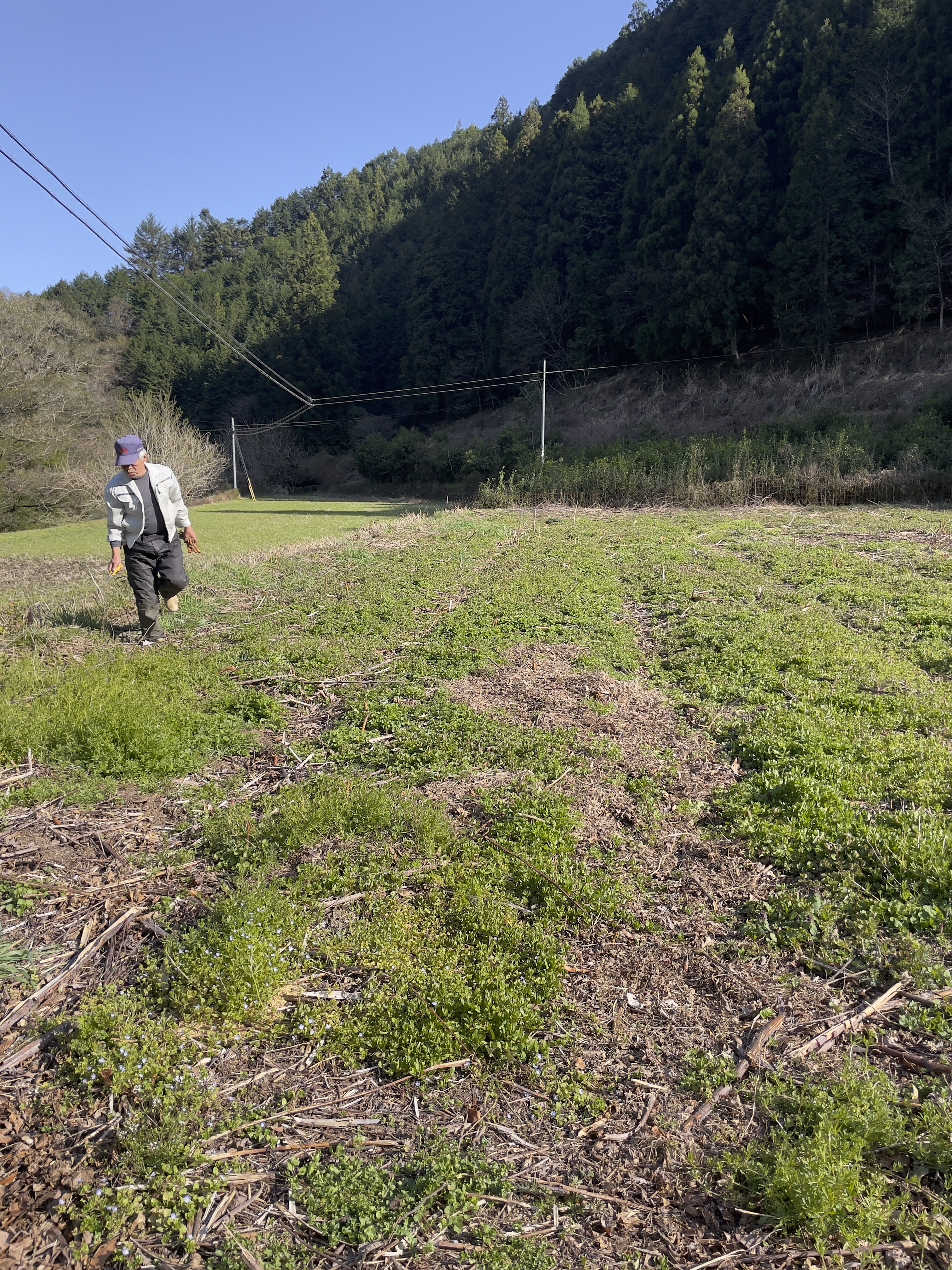
Koichi san had organized a road trip for us. A 3 day journey that took us deep into the mountains of Mie prefecture. We traveled about an hour from Tsu City to the foot of the mountains, where we stayed with friends of his, Matsubara san and his wife – a photographer and a writer respectively; who own a 100 year old Kominka surrounded by rice fields and forests. There we were able to observe wild Itadori growing in sporadic patches above the banks of a small stream. No visible rhizomes. Just small shoots that seemed deceptively fragile.
The Kominka also had a more modern attachment to it, where Matsubara san has made his developing lab as well as a small gallery. We were welcomed with a feast of various dishes including knotweed. We conducted interviews with our hosts and their friends. The evening ran very late, with conversations about plants, rural life, music, literature and art. There we were able to observe wild Itadori growing in sporadic patches above the banks of a small stream. No visible rhizomes. Just small shoots that seemed deceptively fragile.
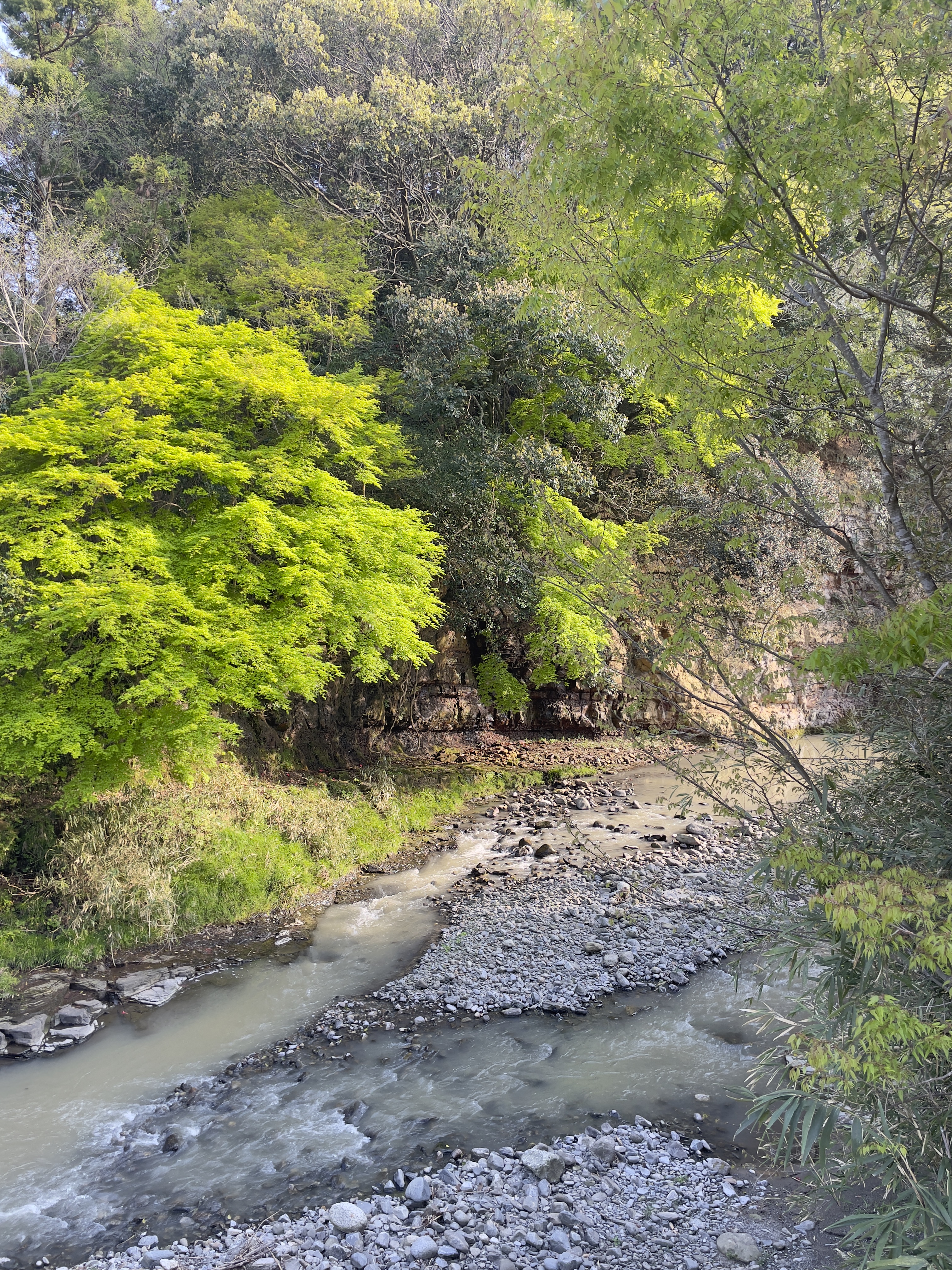
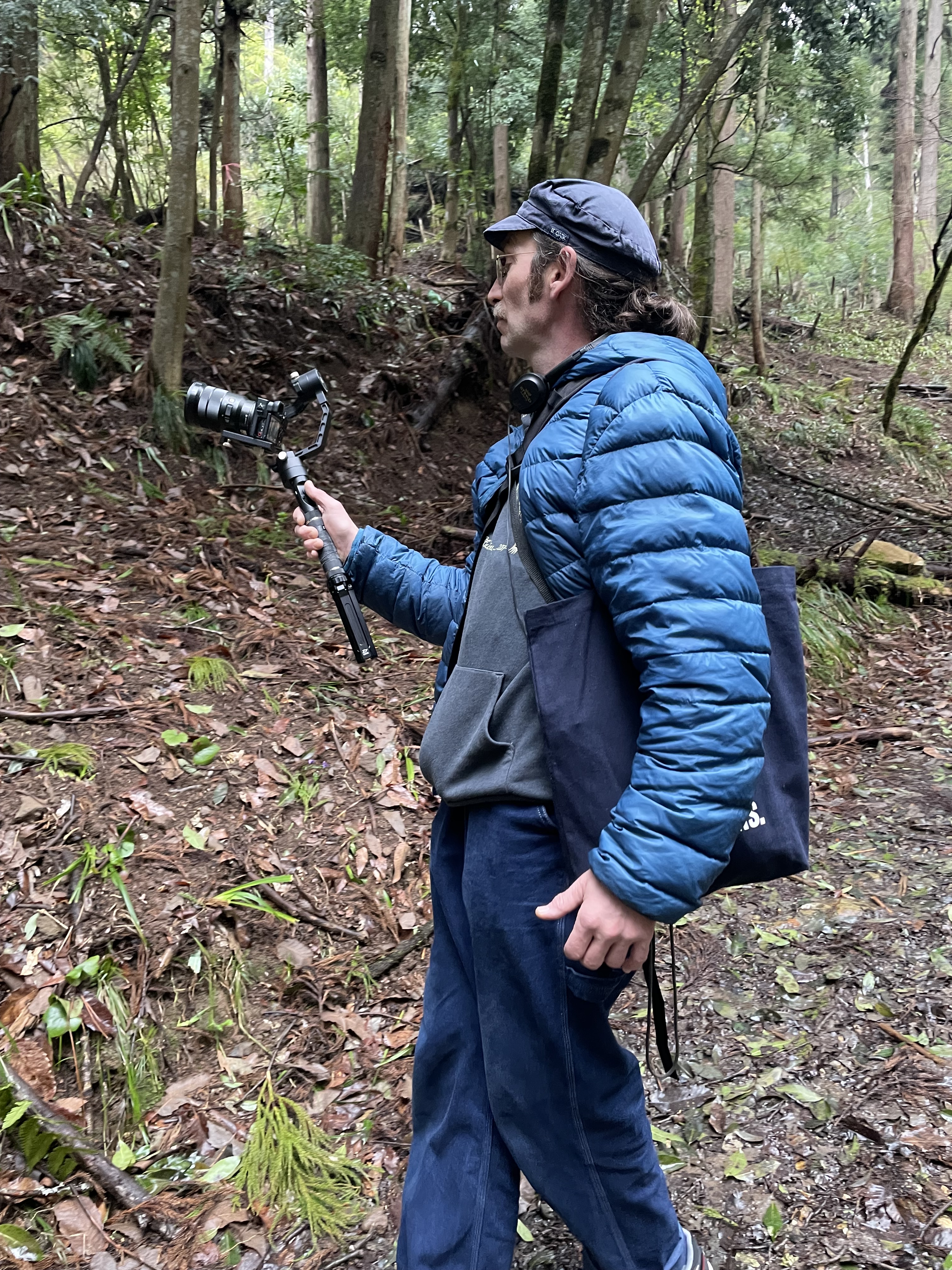
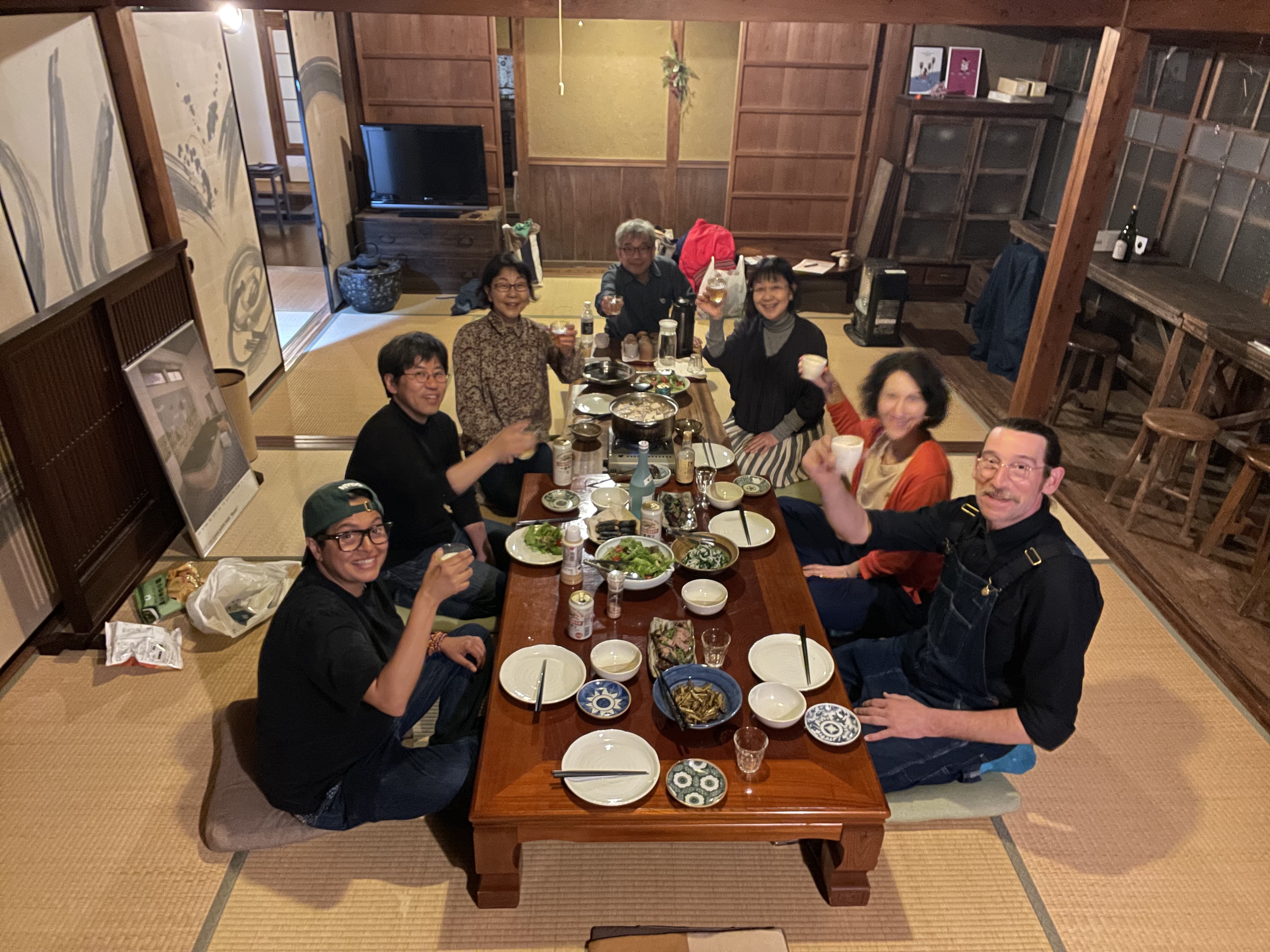
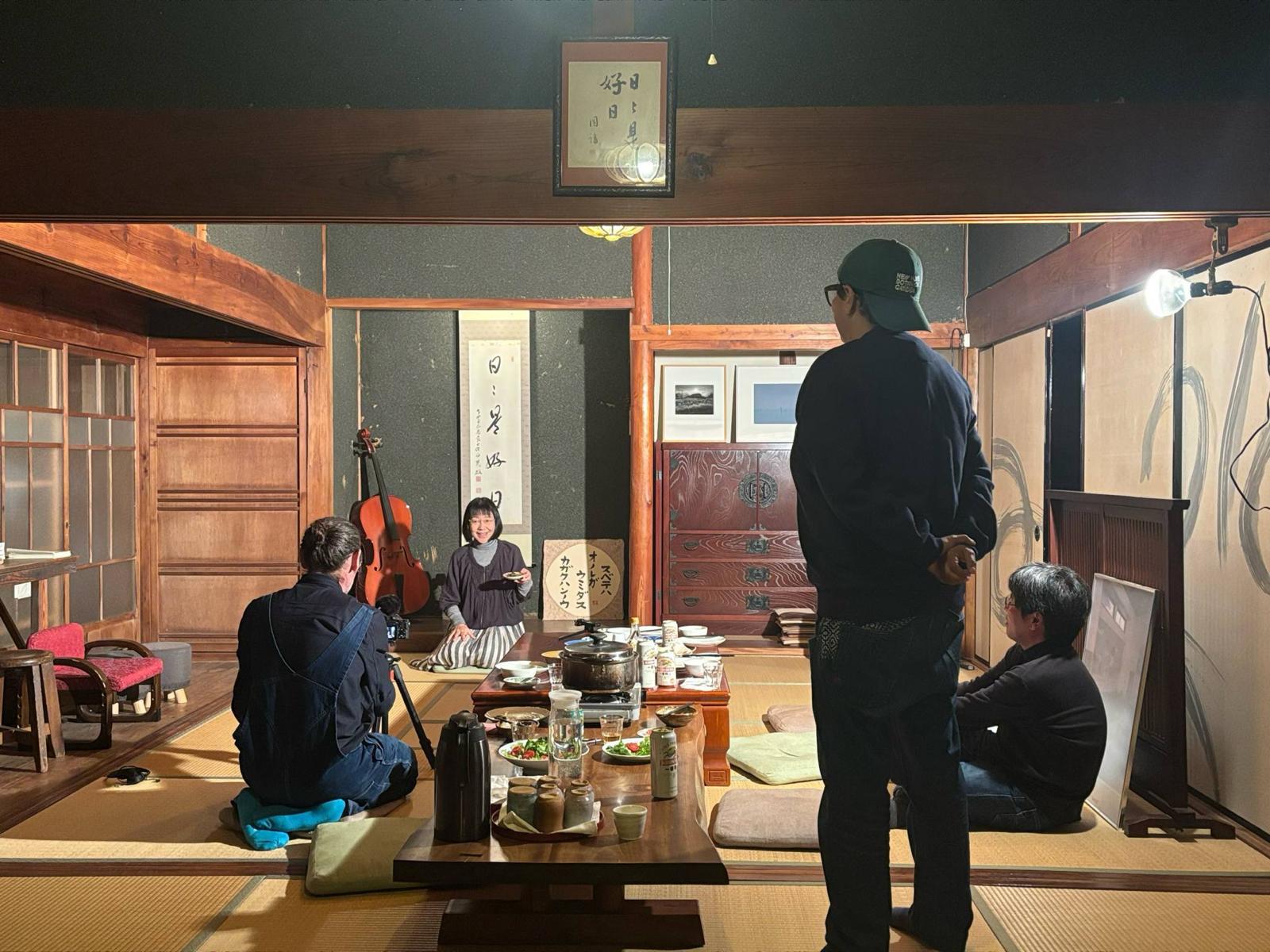
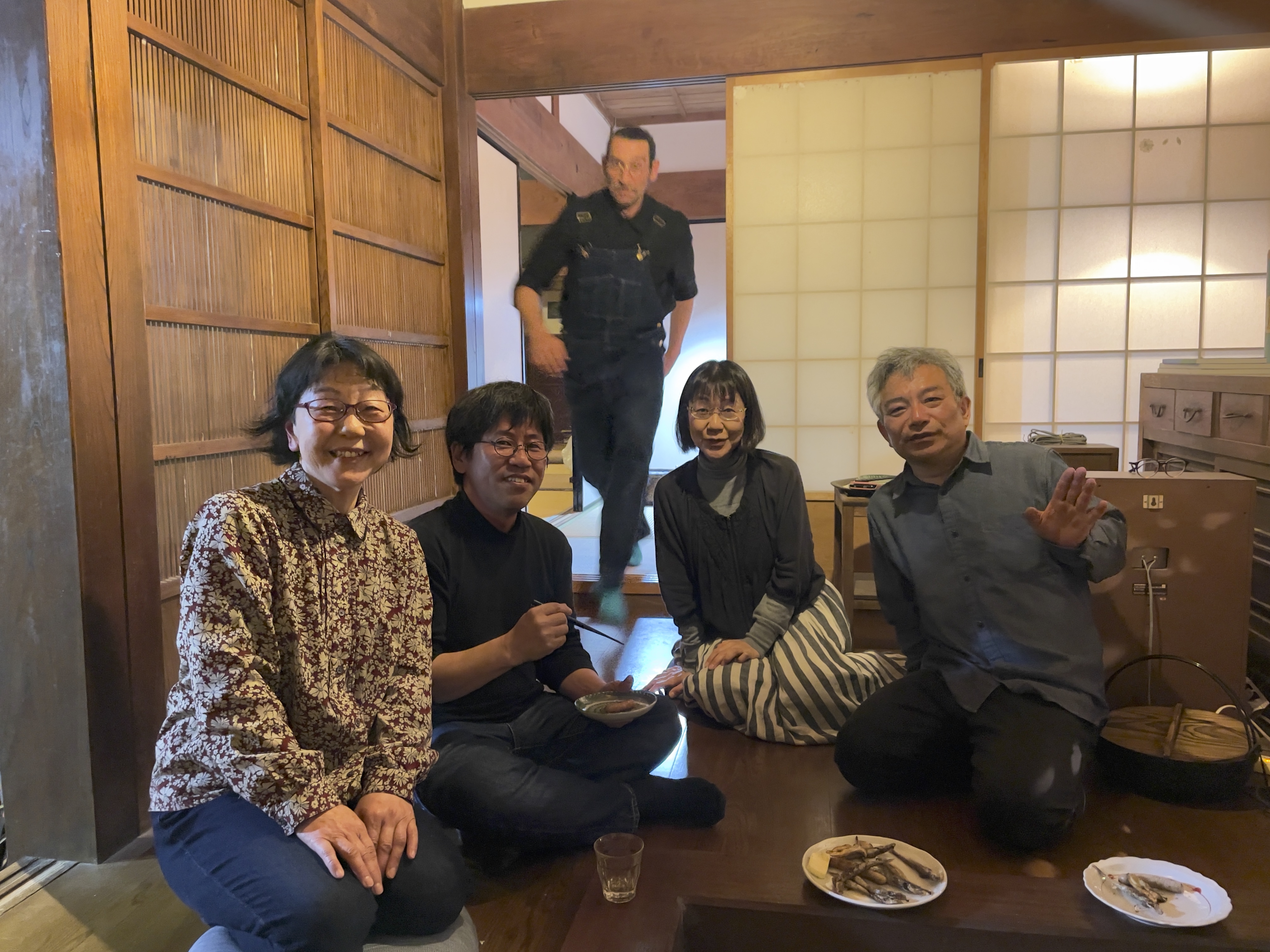
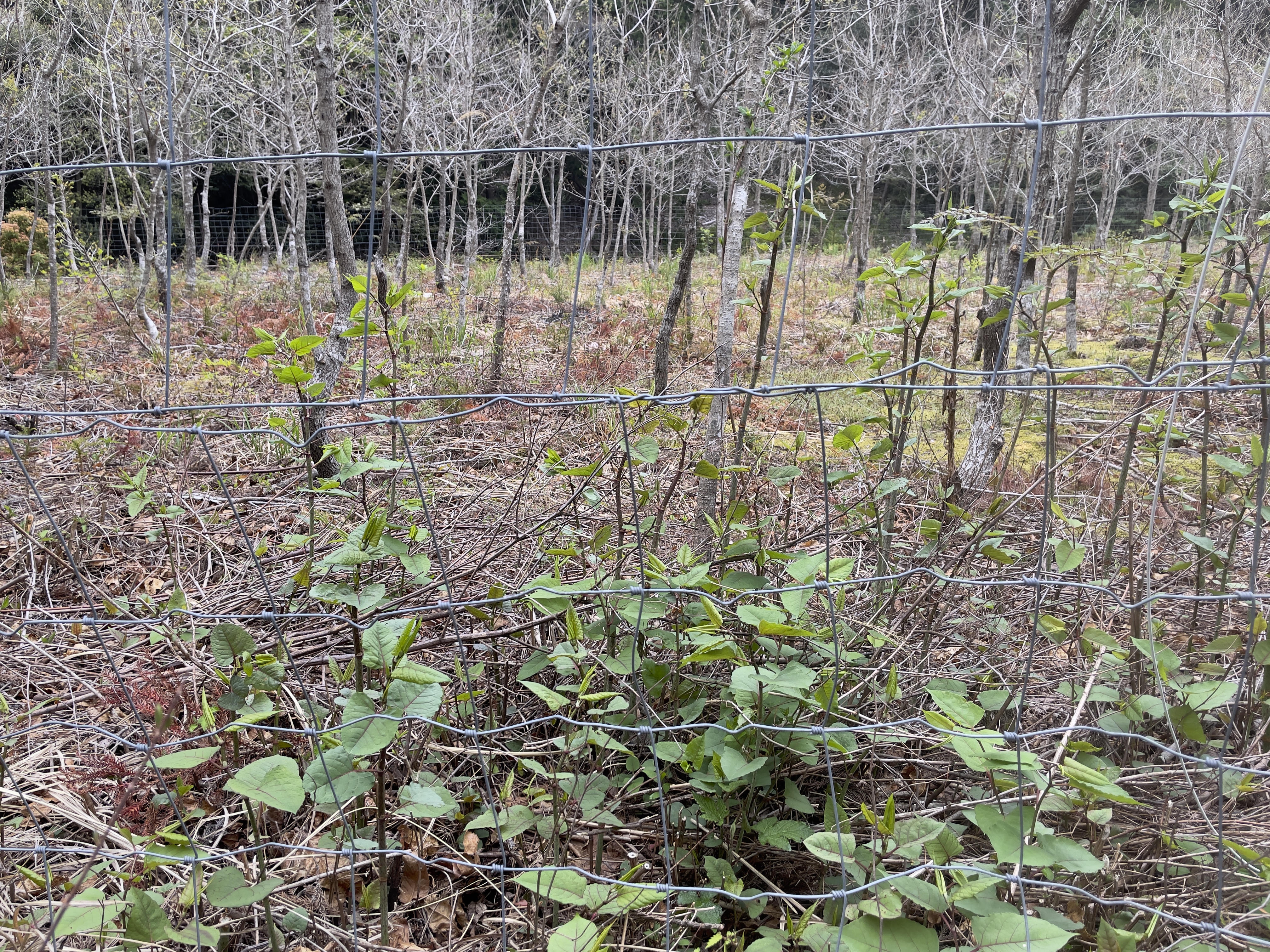
As we traveled further into the mountains of Mie, we visited another friend of Koichi san’s, whose parents live in a remote part of the region. They have been foragers their whole lives. They showed us their foraging spots and the various plants and mushrooms they gather. A slow and mindful life, lived by the gentle passage of seasons. The morning of our departure, they took us to a small plot of land in the vicinity of their home to show us what seemed like an abandoned cultivation of some sort of trees. The plot of land stood behind a high fence. Here, we found more itadori growing behind the fence but also propagating itself outward. A sharp reminder that we are the only species creating artificial borders in order to box the Other in or out. I left Mie with this thought settling in my mind, my ears filled with the melodies of Saba san’s mother singing while playing the shamisen.
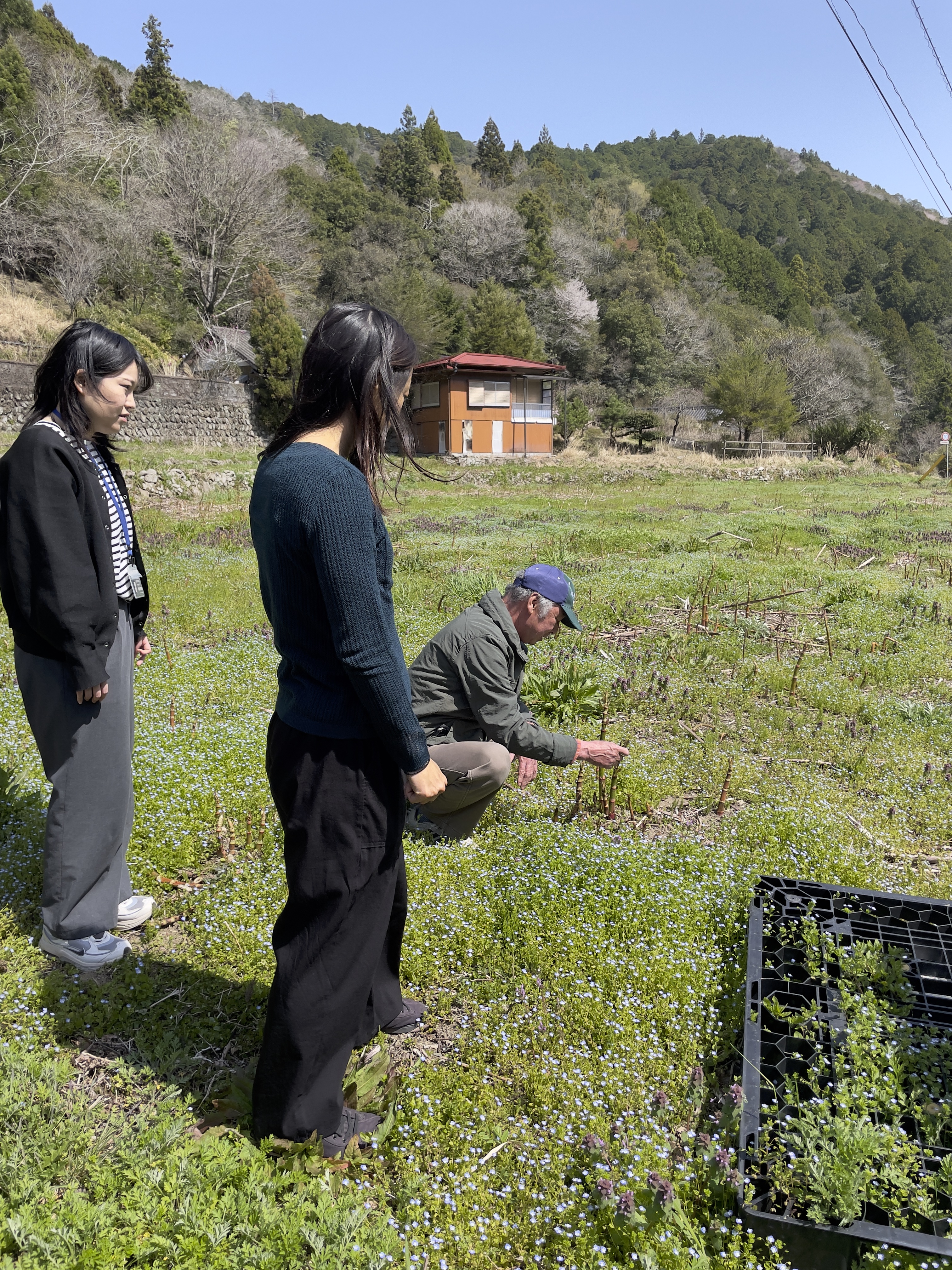
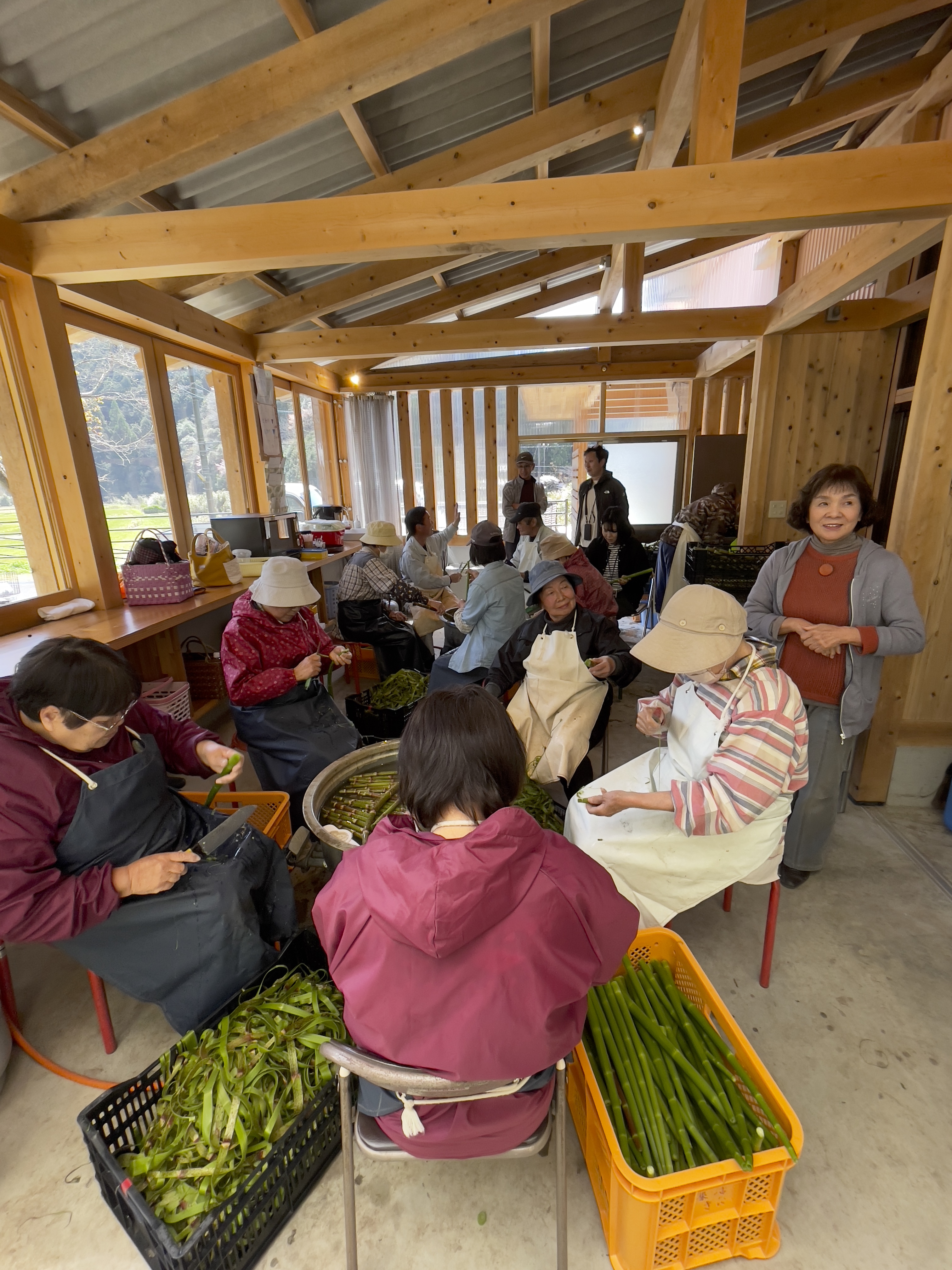
Our journey took us to the southern part of the island of Shikoku, where Itadori is cultivated by a small community of farmers. Our guide Professor Iwasa, a cultural anthropologist from the University of Kochi in Shikoku, took us to meet this small but very dedicated community. We learned that they started cultivating Itadori when they realized that their soil was depleted of nutrients and was too poor for rice farming (the staple crop in that region). one of the farmers explained that Itadori grew fast, all the while supplementing the soil with rich nutrients. It was the perfect plant they said, since it has a rhizomatic root, growing horizontally as opposed to vertically, thereby creating a shallow root system spread across the field. According to them Itadori worked fast and after a few years of its cultivation, the soil would be nutrient dense and ready to plant rice again. Taken by surprise, we asked them how they managed to survive on Itadori as a crop. The farmer explained that the tender, young Itadori shoots were harvested in Spring, and that the community had established a small processing center where the shoots were blanched, peeled, pickled or fermented, then bottled or vacuum packed. This community had essentially created a micro business of small batch Itadori pickles. When we visited the community center, I was amazed at the collective enthusiasm of this ageing community of mostly women (with a few men), sitting in circles, their hands working away quickly and their chattiness not by any means taking away their sharp focus on the task at hand: dipping Itadori stalks into hot water to blanch them and with a small knife, stripping away the thick outer skin of the stems to reveal a tall, bright green stalk that looked like a cross between rhubarb and stemmed celery. The pickling and sealing area was in a small shed adjacent to the sunny blanching room, we unfortunately couldn’t enter this area as it was kept sealed and immaculately clean to avoid food contamination. At the end of our visit, the town council representative as well as the head farmer of Ohnomi gave us packets of freshly fermented Itadori pickles before seeing us off. In the days that we spent in the Kochi prefecture, we happened upon a micro publication called Itadori Journal. With a little serendipity, we managed to contact the creator Yayako san, a young woman who had moved from the Big City to Ohnomi, in search of a more mindful life. She explained that Japan had started a scheme – the Regional Revitalization Cooperation Corps that would provide some financial assistance, and benefit the youth of the country and its ageing population simultaneously. This scheme offered young Japanese city dwellers, who were suffering from the extreme demands of urban work culture, to move to depopulated, rural areas of the country and live alongside the farmers, providing support to ageing rural communities. Yayako san said this opportunity to live away from the urban sprawl had enabled her to engage in activities that she may not have had the mental bandwidth or time to do otherwise. She arranged for us to meet the couple she has been assisting. The couple was currently growing Itadori on what used to be their rice paddy. The farmer explained that the quality of Itadori varied on his field and that only the best would be harvested. He also mentioned that tea could be made from dried leaves and during the war, the short supply of tobacco was replaced by Itadori leaves. The plant is known as a high source of reservatrol – a plant polyphenol – with great antioxidant properties. Studies have, in fact been conducted with the bark of the rhizome and the SARS- Covid virus, indicating that the properties from the bark can neutralize the virus in vitro.
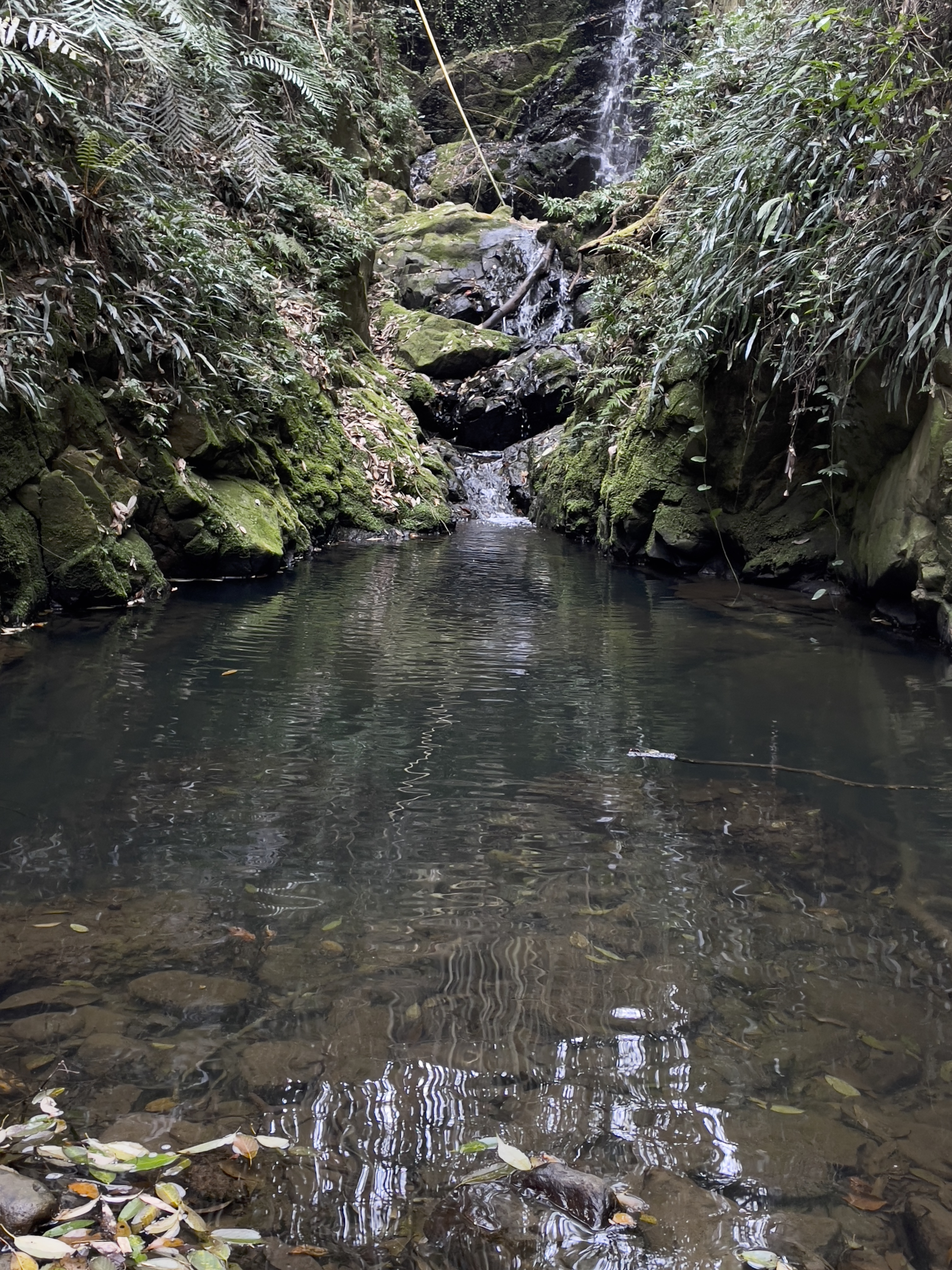
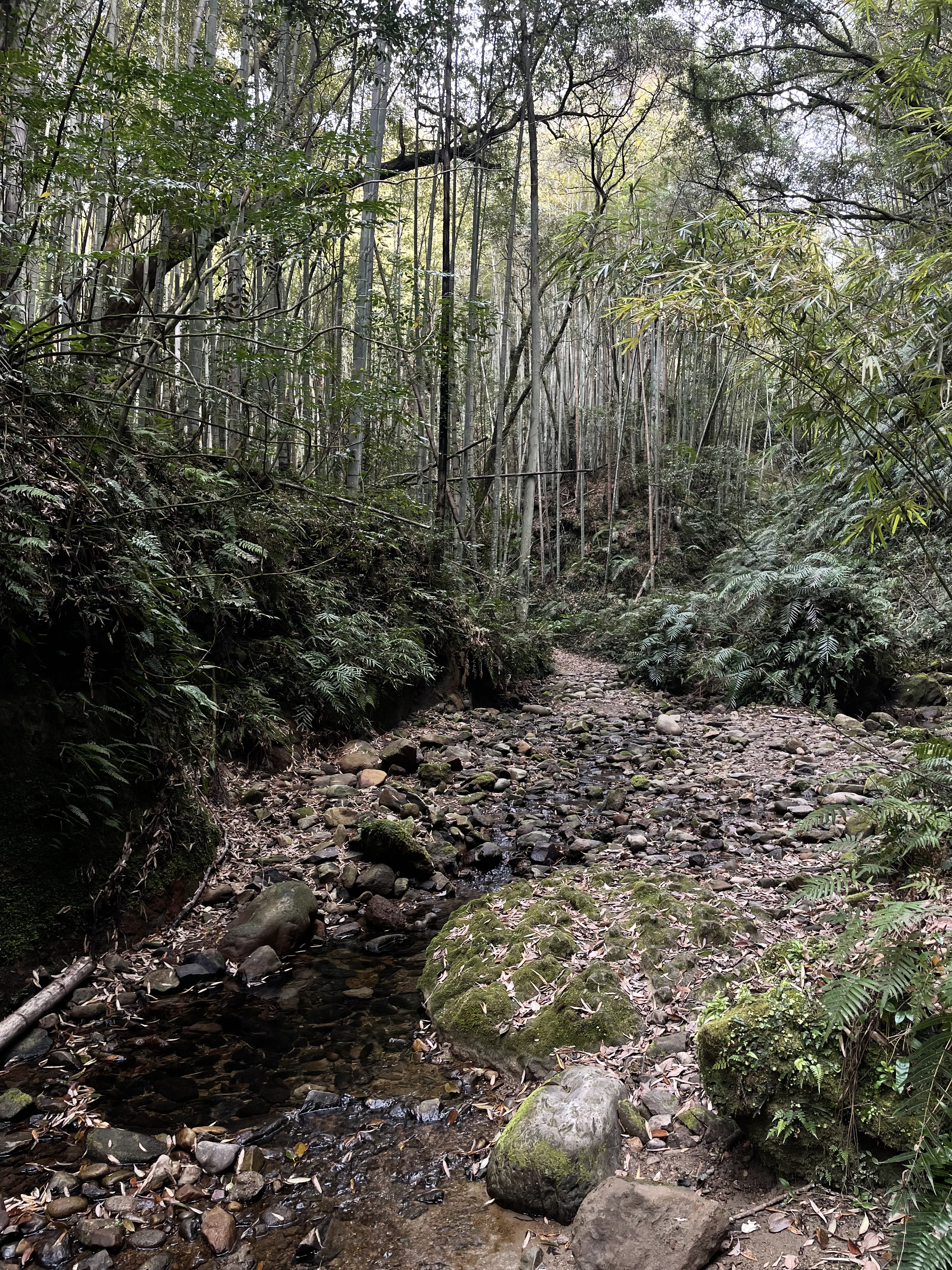
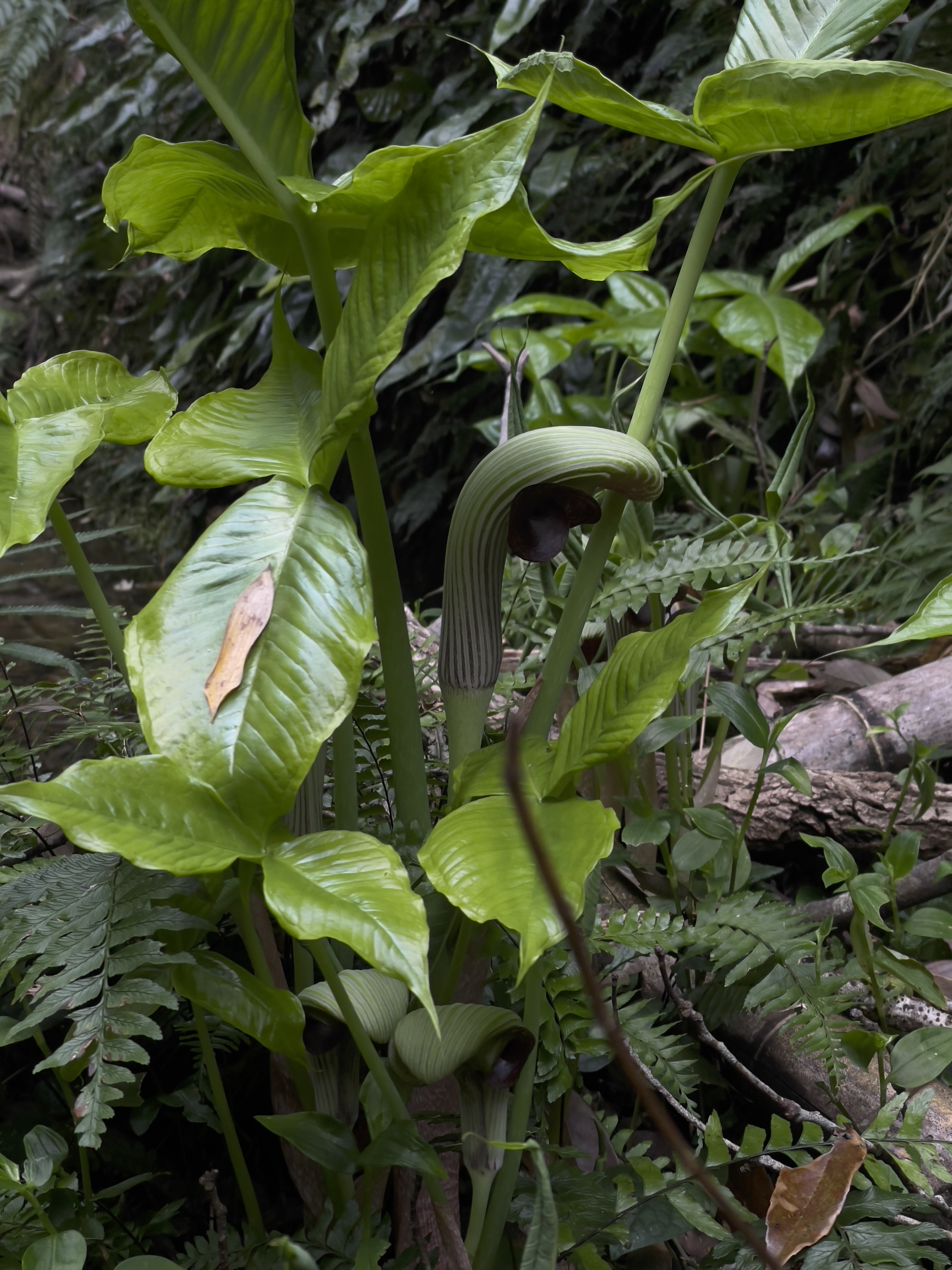
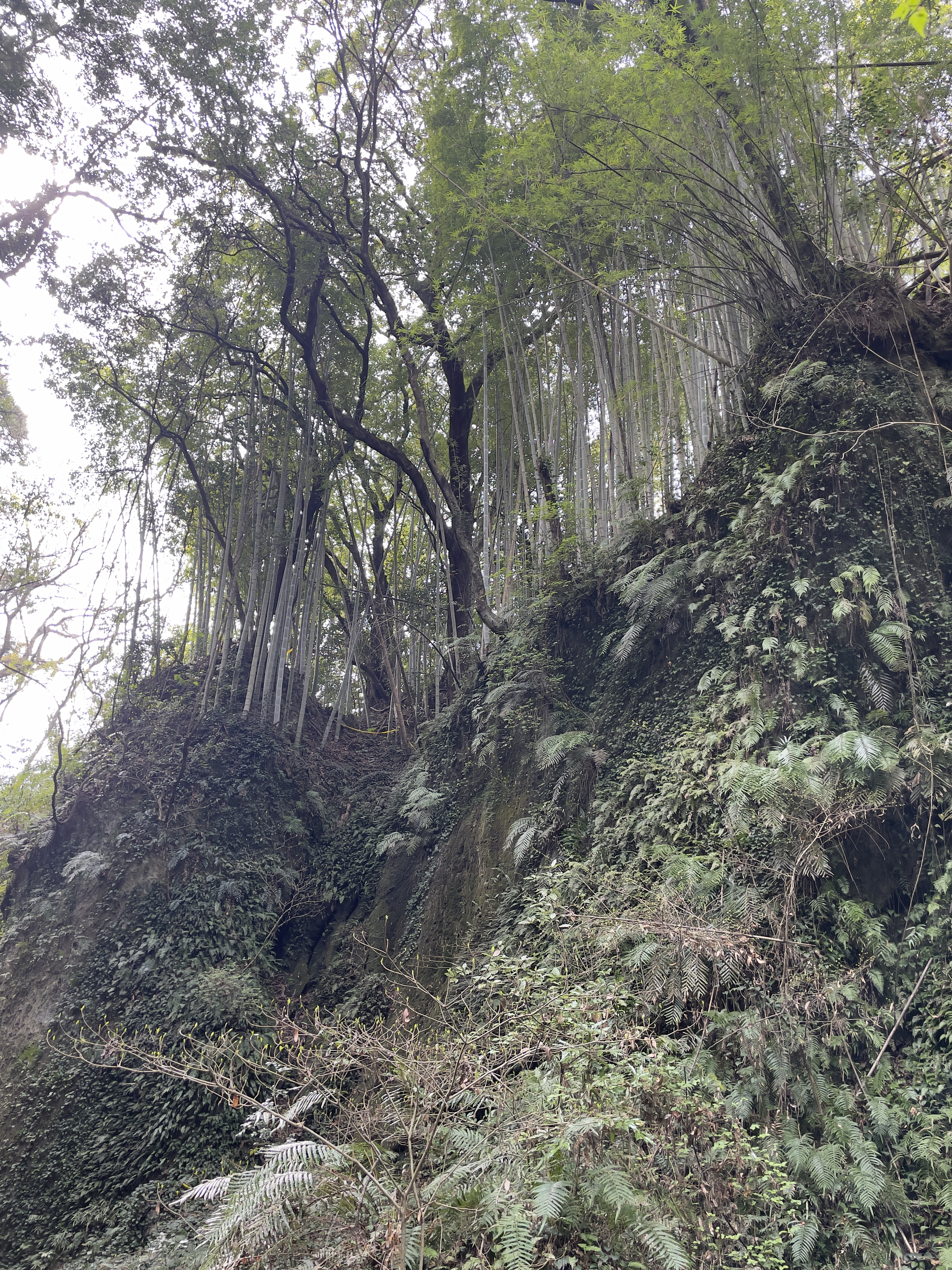
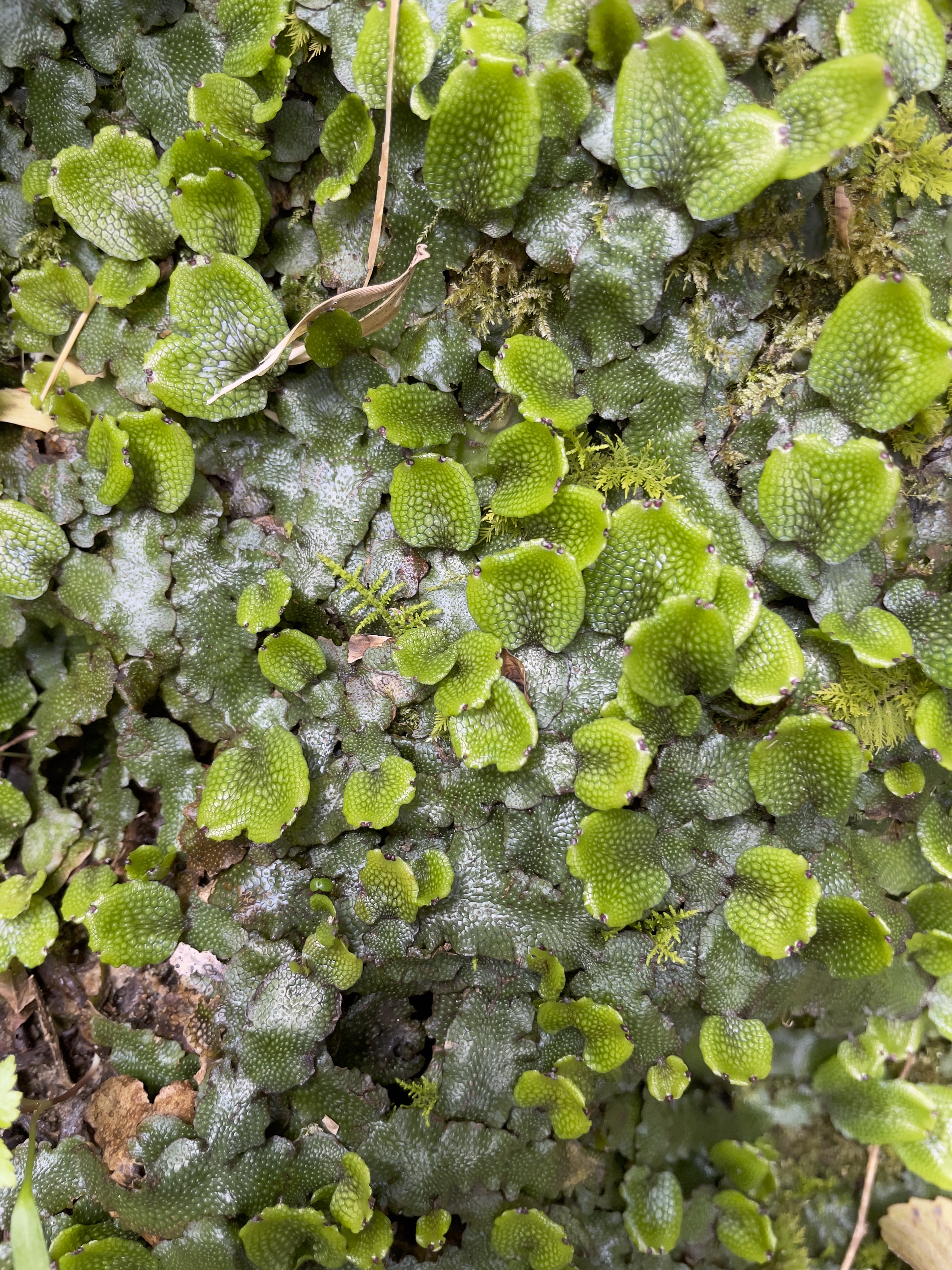
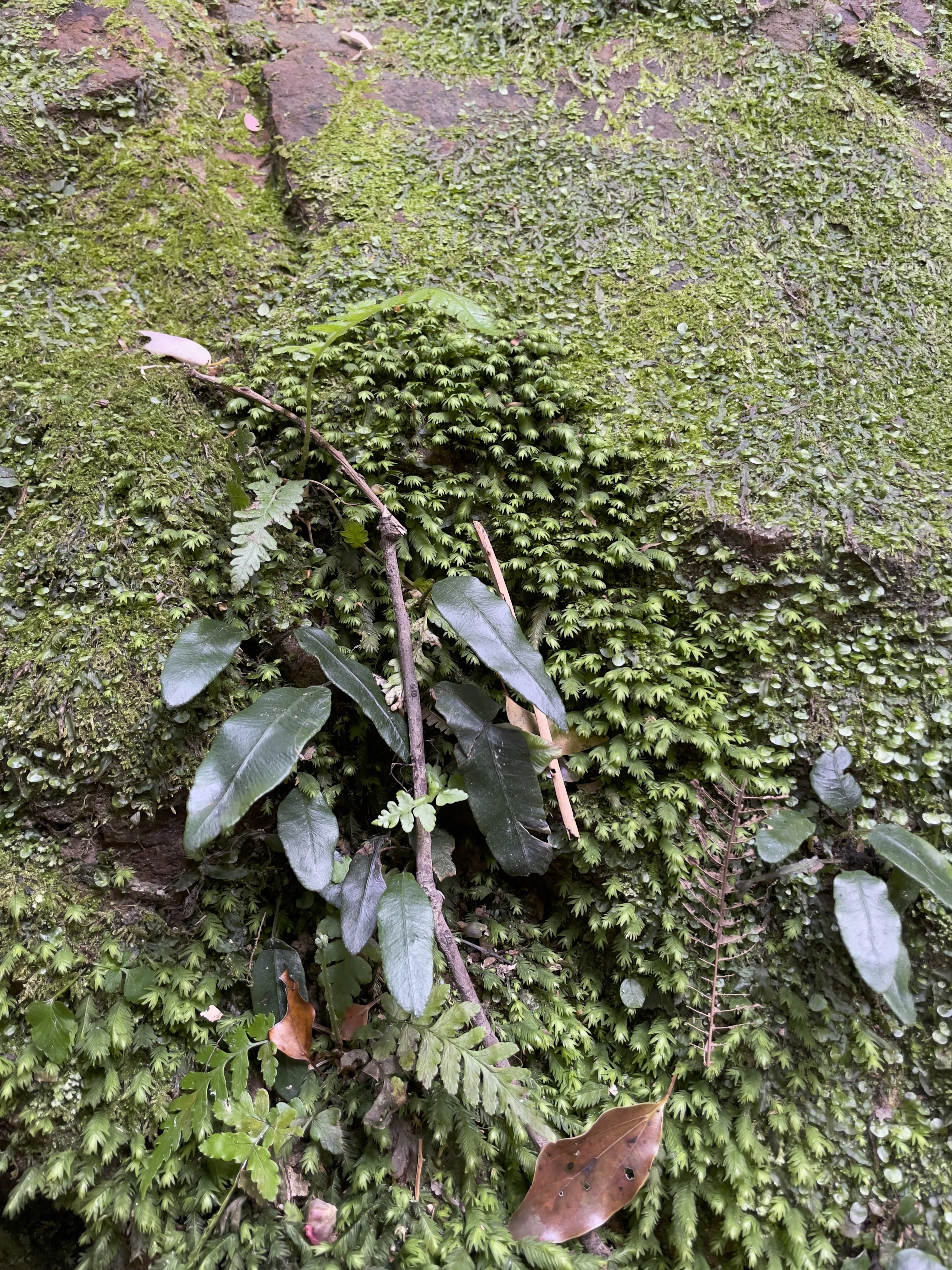
During our time on Shikoku, we explored the Ioki cave ( created by erosion, spanning the Pliocene to Pleistocene eras), just east of Aki city. The cave leads to a small canyon that completely took us by surprise with its waterfalls creating small brooks and its lush emerald carpet. The canyon has a micro climate that enables what seems like a small rainforest that grows tropical and subtropical plants. The canopy of broad leaved trees capture the humidity necessary to maintain the micro climate that allows for an average temperature of 20 degrees celsius all year around. Dr. Tomitaro Makino, known as the ‘Father of Japanese botany’ conducted extensive research on the canyon’s biodiversity. His studies show that 40 odd varieties of ferns grow there – an occurrence rare enough for him to push for protecting the area. His efforts eventually led to Japan declaring the cave a national natural monument. I was totally captivated by the sheer number of plants all coexisting within the narrow canyon (being 5 meters high, 3 meters wide and 100 meters long). I spent the day exploring and documenting ferns, cobra lilies, mosses, liverworts, camelia and giant bamboo among the several other plants.
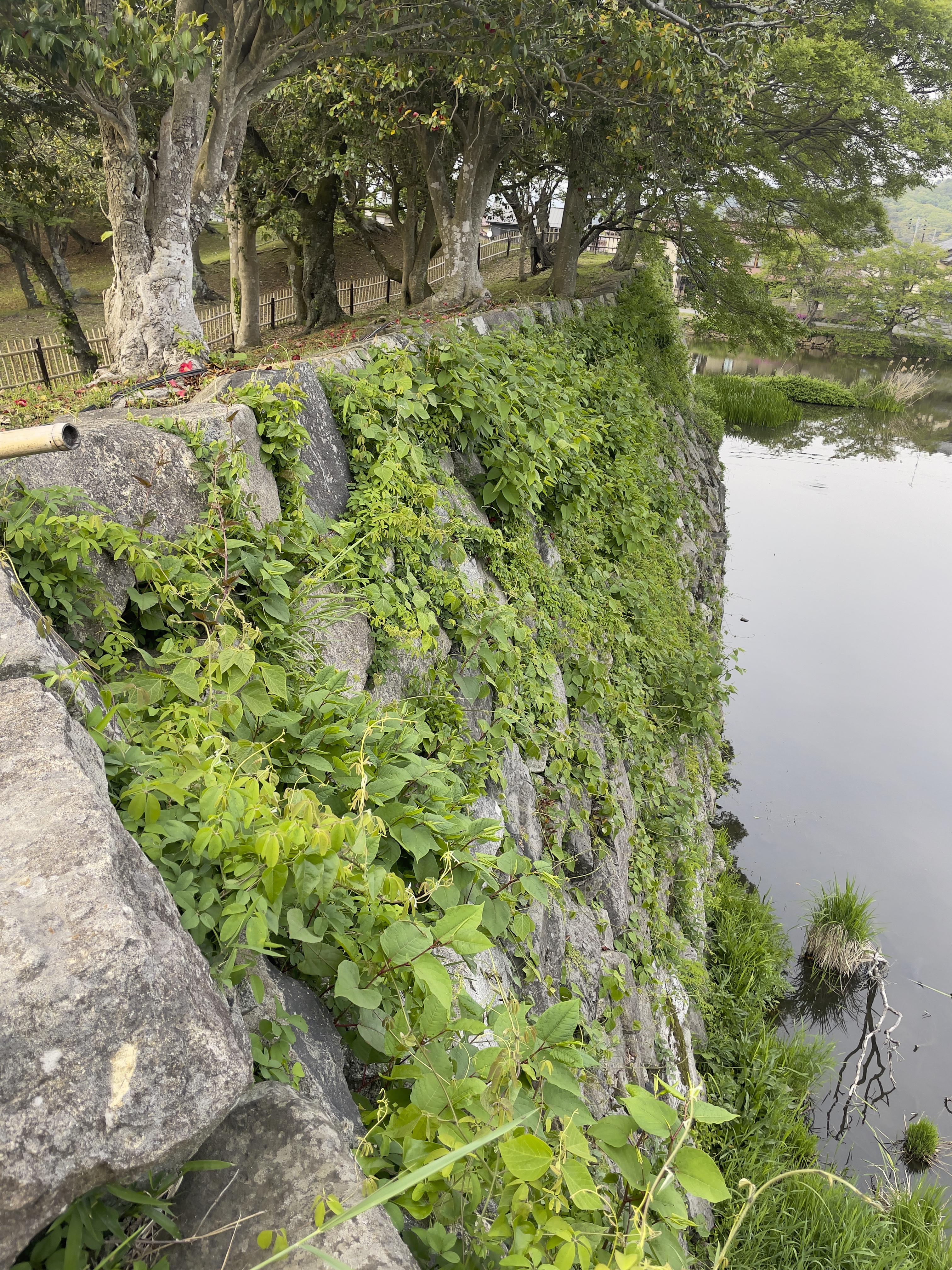
Finally, an educated guess led us to the shores of Lake Biwa. We didn’t have a person of contact but somehow I was certain that we would find Itadori growing in the region. We made Nagahama our base for a few days and drove around the shores of the lake. We were not disappointed. After our first find, my research partner Xavier Ripolles and I entertained ourselves by playing ‘Itadori bingo’ in the car. Itadori grows wild on the breezy shores of the lake as well as on the ramparts of the nearby Hikone castle. It was our last stop for in our quest to trace the path of this quietly resilient plant. As we sat on the edge of the rampart, I reflected back on our 6 week adventure in Japan, humbled by the polarizing power of this enigmatic plant doing what plants do: navigating through human attempts to thwart its growth in order to survive. After all, we are the only species that create physical borders, caging ourselves in to keep the Other out. In my case, itadori played a central role in introducing me to incredible people without whom my research would not have been as successful. Watanabe Koichi whom I now cherish as a dear friend and collaborator.
Drawings:
These are the first couple of works, with more to follow.